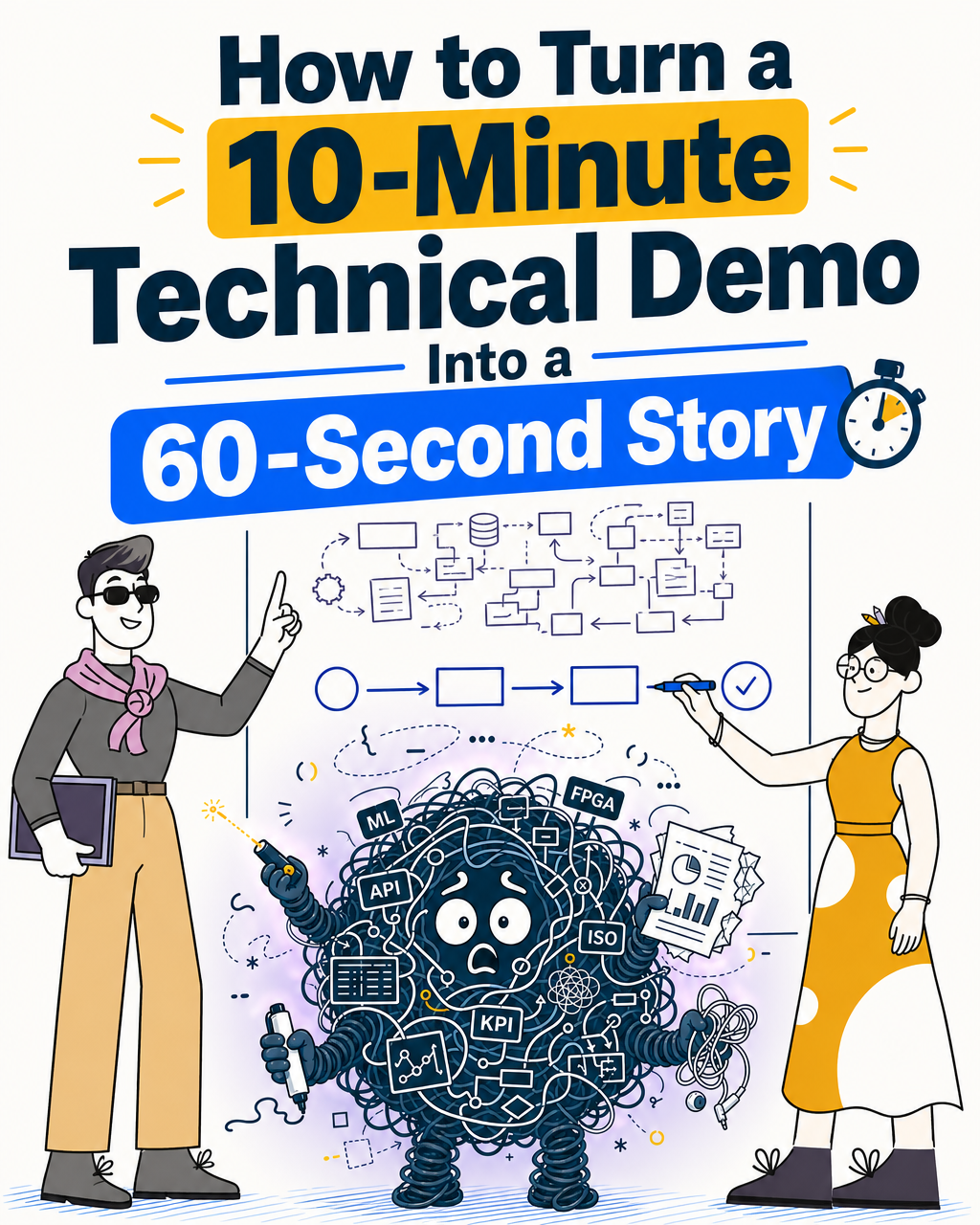
What a $5,000 Explainer Actually Buys You (vs. a $25k Agency)
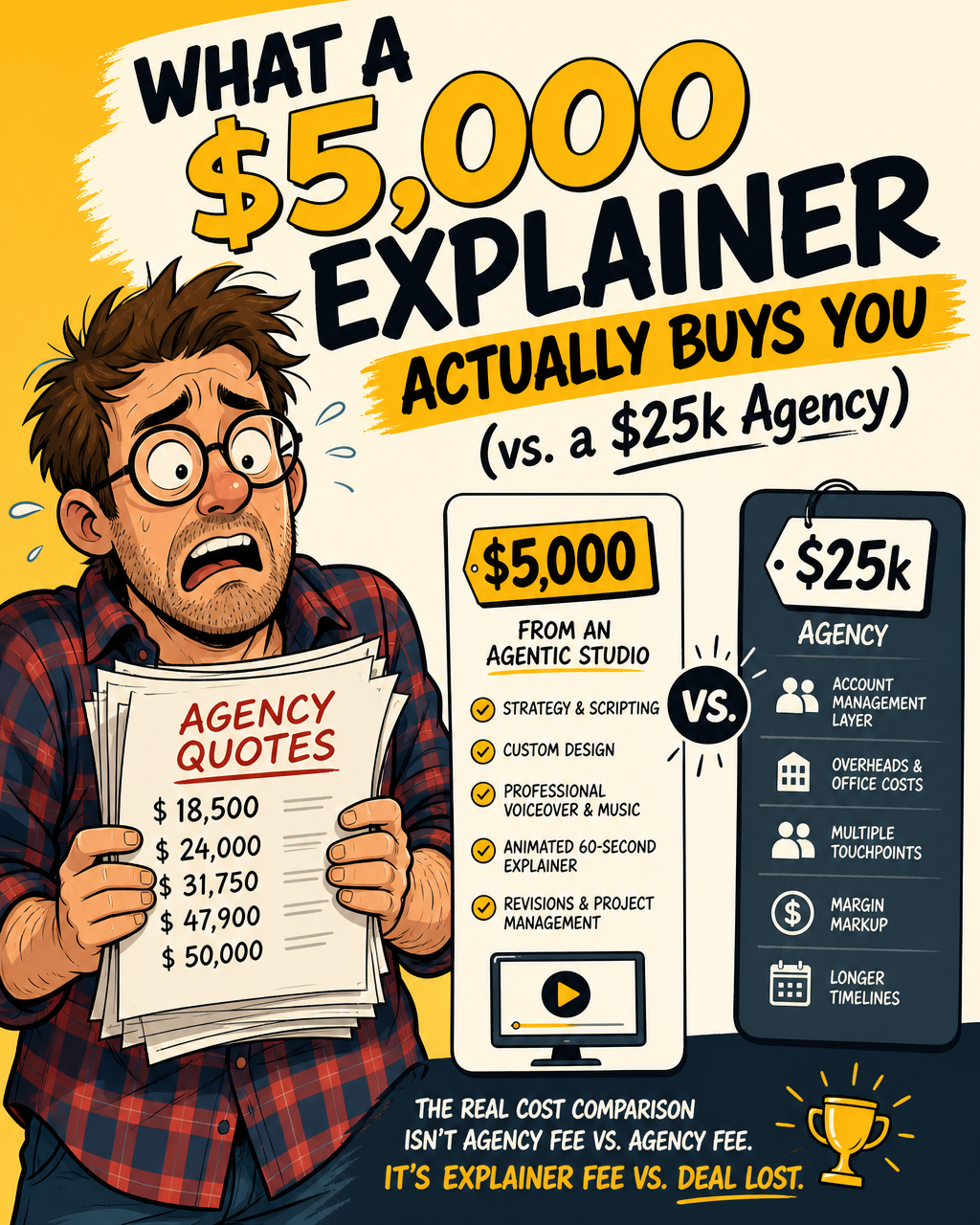
If you've shopped around for an animated explainer video recently, you've probably had the wind knocked out of you by a quote. A reputable Australian motion-graphics studio will tell you, with a straight face, that a 60-second explainer costs somewhere between $12,000 and $50,000 AUD. And they're not lying. That's the actual market rate for traditional production.
So when someone offers you the same thing for $5,000, your first instinct is reasonable scepticism. Either it's offshore template work, or something important is missing.
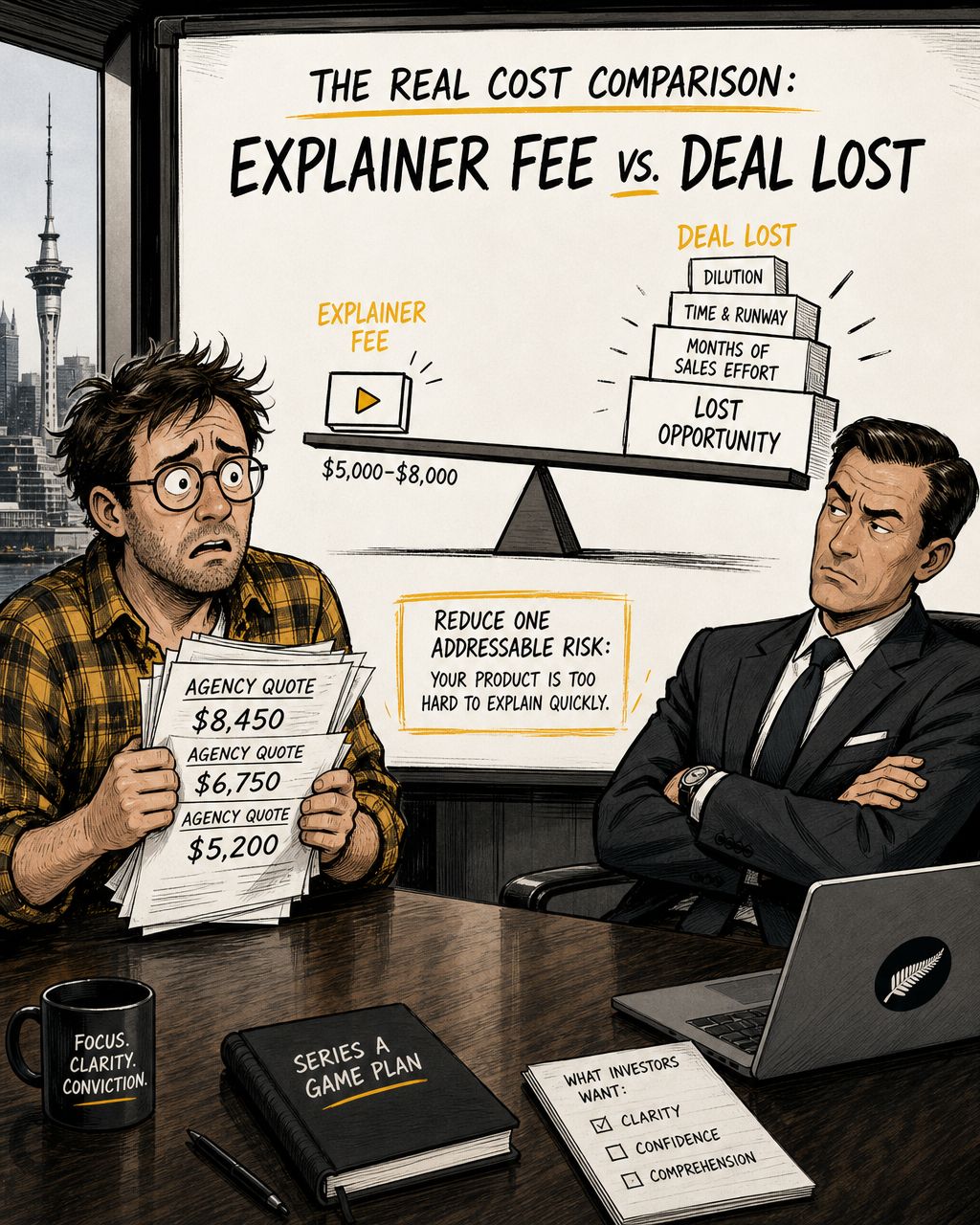
This post explains what's inside a lower-priced explainer from an agentic studio, why the price difference isn't necessarily a quality shortcut, and why the real cost comparison isn't agency fee vs. agency fee. It's explainer fee vs. deal lost.
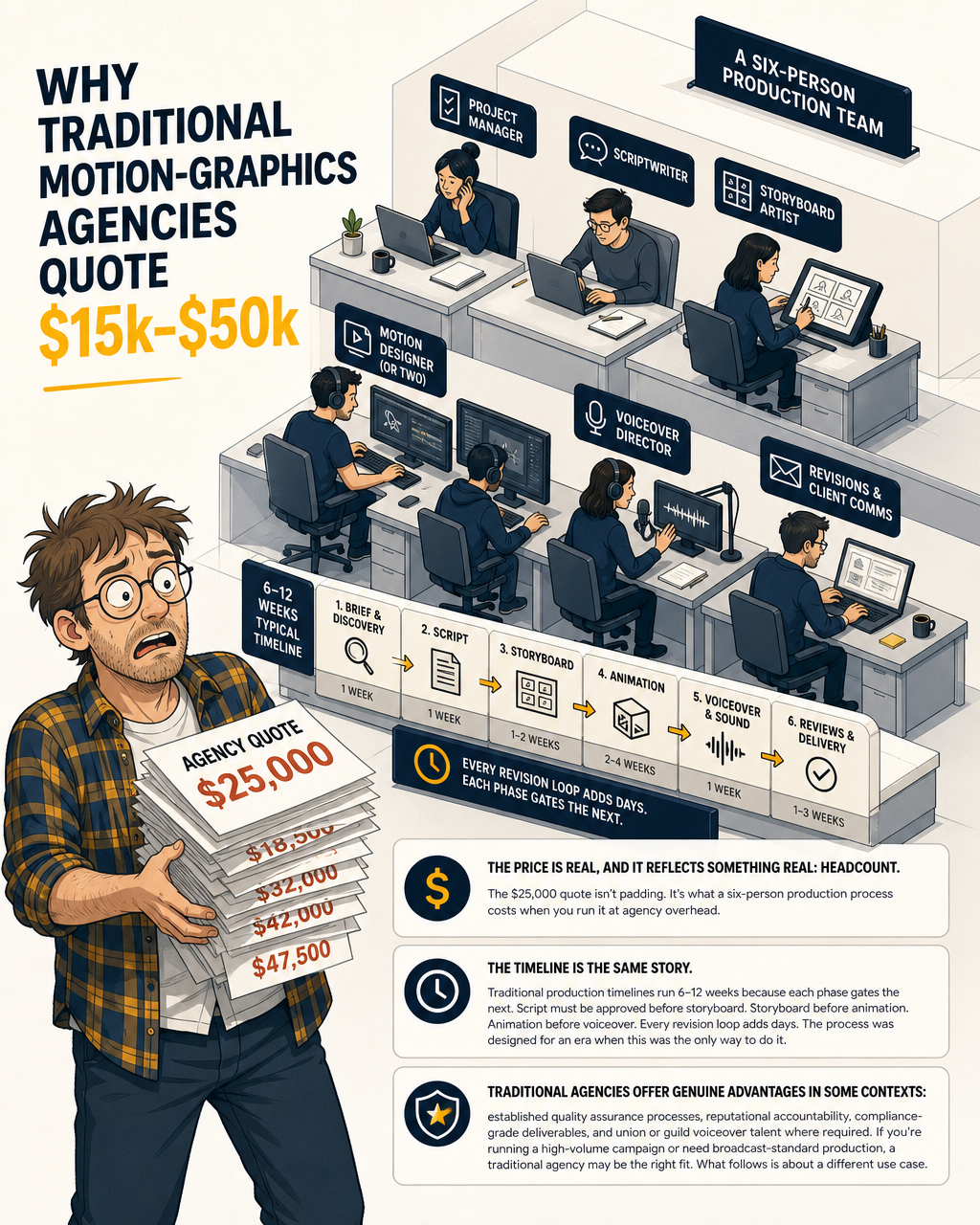
Why traditional motion-graphics agencies quote $15k–$50k
The price is real, and it reflects something real: headcount.
A traditional motion-graphics agency runs a production team. You've got a project manager, a scriptwriter, a storyboard artist, a motion designer (or two), a voiceover director, and someone to handle revisions and client comms. For a 60-second explainer, that team might spend 6–8 weeks moving a brief through pre-production, animation, and delivery. Every week is billable time across multiple salaries.
The $25,000 quote isn't padding. It's what a six-person production process costs when you run it at agency overhead.
The timeline is the same story. Traditional production timelines run 6–12 weeks because each phase gates the next. Script must be approved before storyboard. Storyboard before animation. Animation before voiceover. Every revision loop adds days. The process was designed for an era when this was the only way to do it.
That said, traditional agencies offer genuine advantages in some contexts: established quality assurance processes, reputational accountability, compliance-grade deliverables, and union or guild voiceover talent where required. If you're running a high-volume campaign or need broadcast-standard production, a traditional agency may be the right fit. What follows is about a different use case.
Three things that collapse the price without collapsing the quality
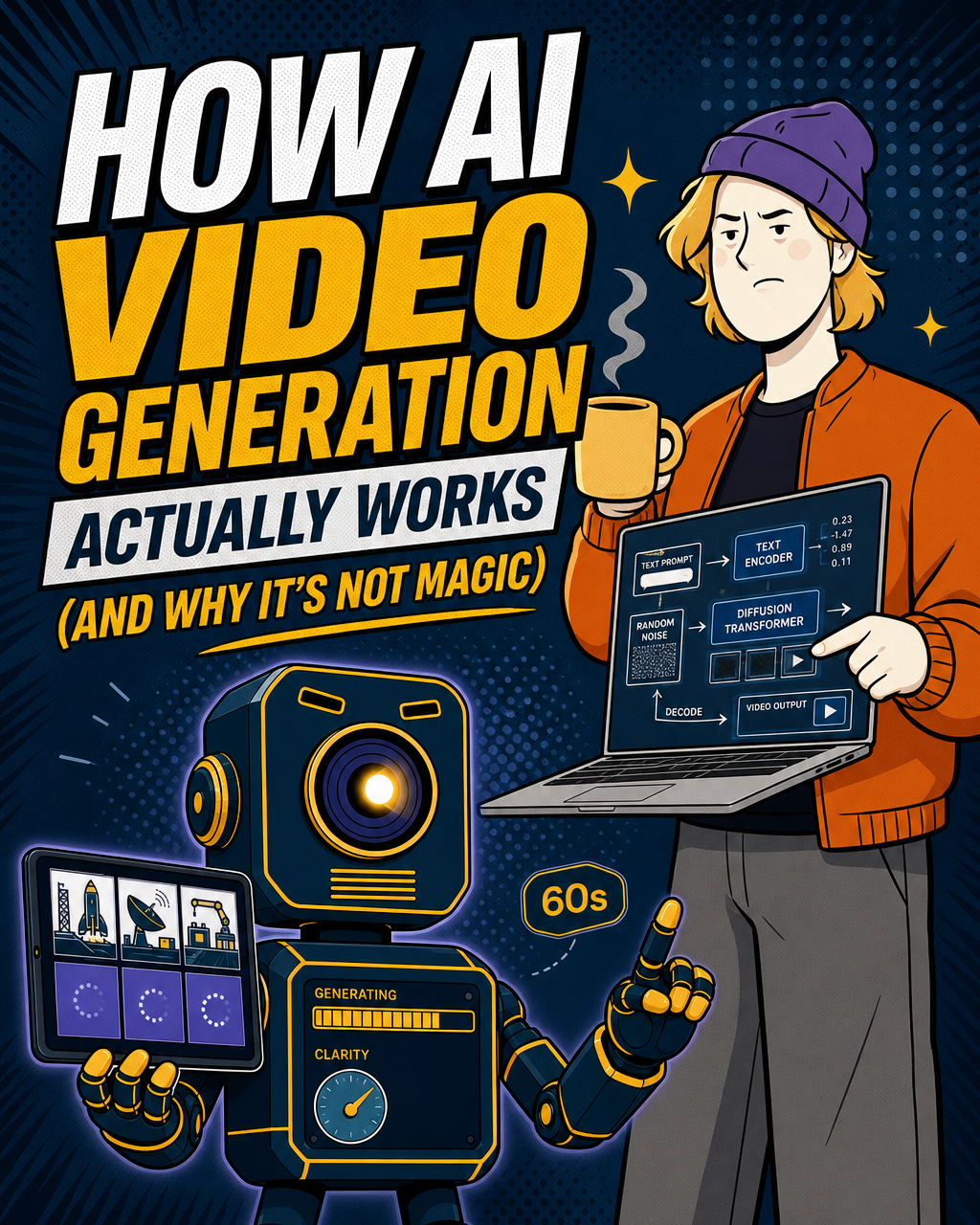
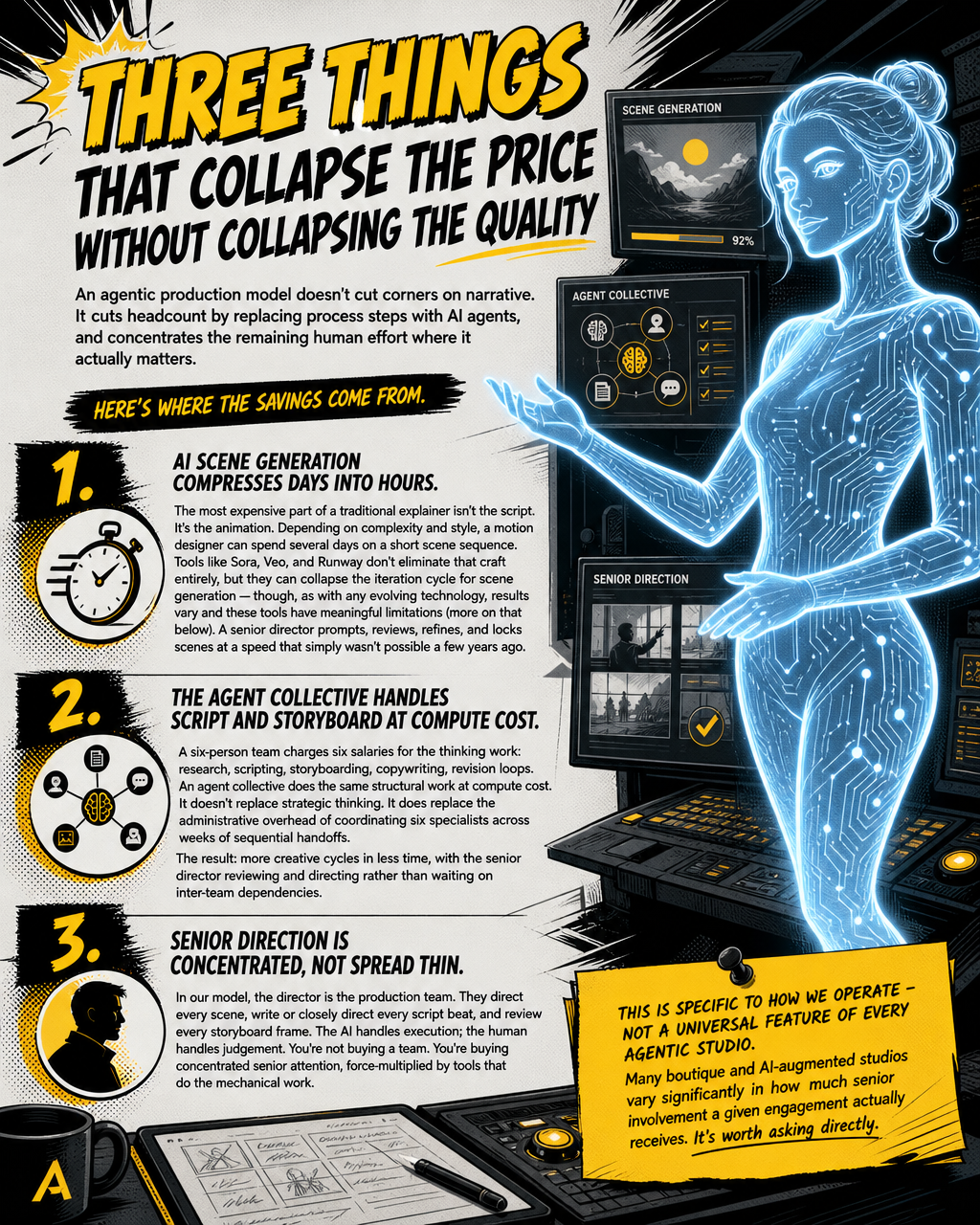
An agentic production model doesn't cut corners on narrative. It cuts headcount by replacing process steps with AI agents, and concentrates the remaining human effort where it actually matters.
Here's where the savings come from.
1. AI scene generation compresses days into hours.
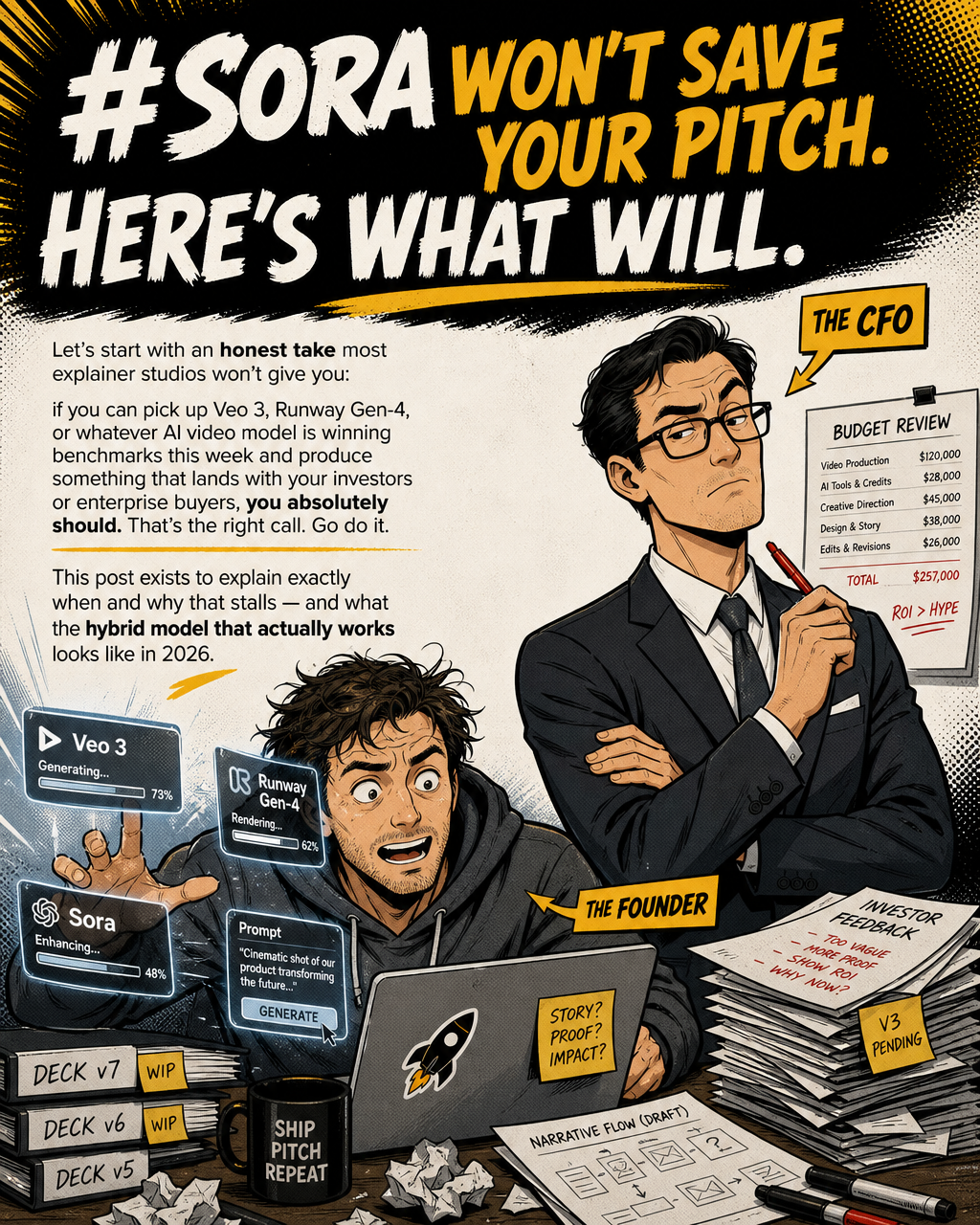
The most expensive part of a traditional explainer isn't the script. It's the animation. Depending on complexity and style, a motion designer can spend several days on a short scene sequence. Tools like Sora, Veo, and Runway don't eliminate that craft entirely, but they can collapse the iteration cycle for scene generation — though, as with any evolving technology, results vary and these tools have meaningful limitations (more on that below). A senior director prompts, reviews, refines, and locks scenes at a speed that simply wasn't possible a few years ago.
2. The agent collective handles script and storyboard at compute cost.
A six-person team charges six salaries for the thinking work: research, scripting, storyboarding, copywriting, revision loops. An agent collective does the same structural work at compute cost. It doesn't replace strategic thinking. It does replace the administrative overhead of coordinating six specialists across weeks of sequential handoffs.
The result: more creative cycles in less time, with the senior director reviewing and directing rather than waiting on inter-team dependencies.
3. Senior direction is concentrated, not spread thin.
In our model, the director is the production team. They direct every scene, write or closely direct every script beat, and review every storyboard frame. The AI handles execution; the human handles judgement. You're not buying a team. You're buying concentrated senior attention, force-multiplied by tools that do the mechanical work.
This is specific to how we operate — not a universal feature of every agentic studio. Many boutique and AI-augmented studios vary significantly in how much senior involvement a given engagement actually receives. It's worth asking directly.
What you're actually buying: narrative architecture, not motion graphics
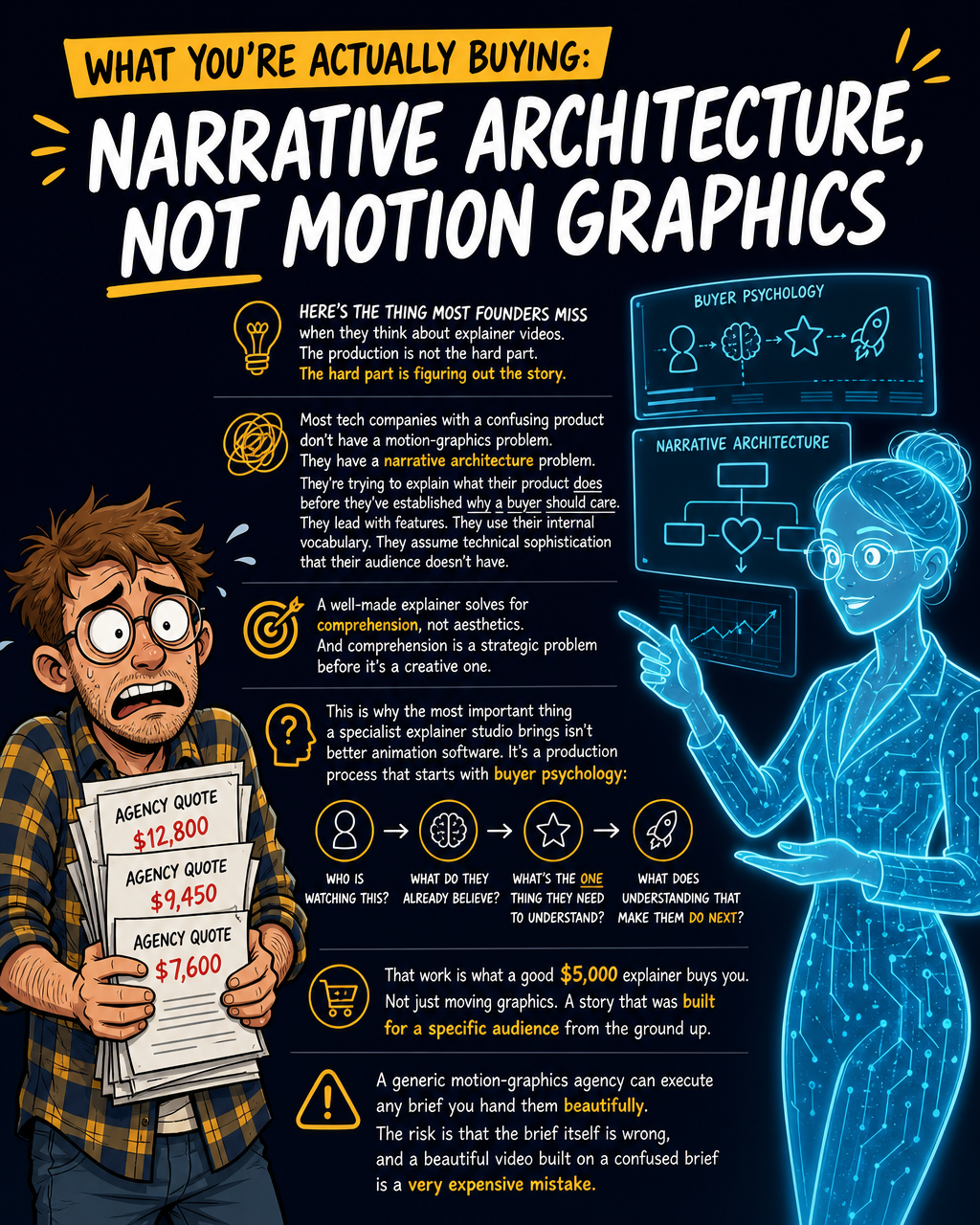
Here's the thing most founders miss when they think about explainer videos. The production is not the hard part.
The hard part is figuring out the story.
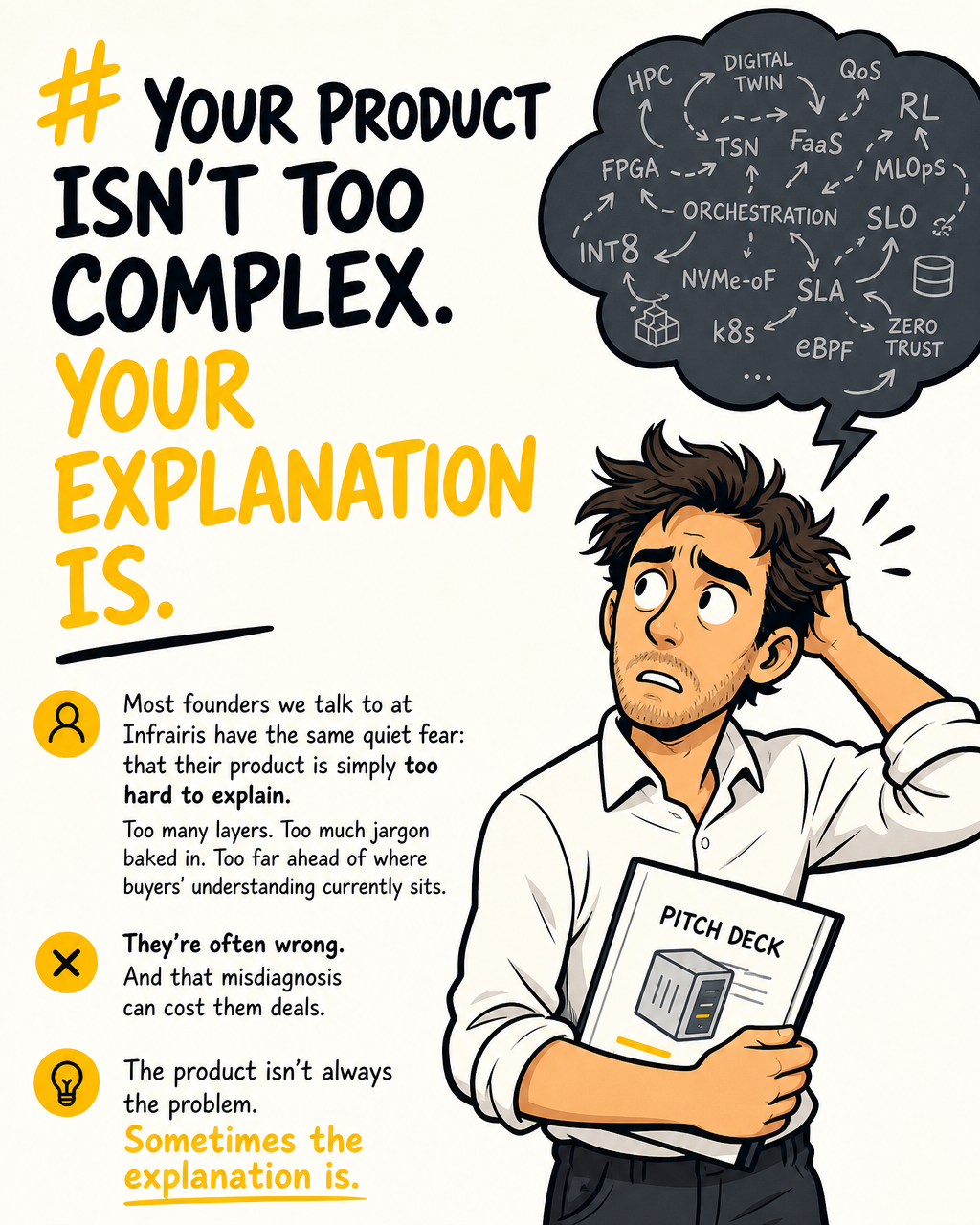
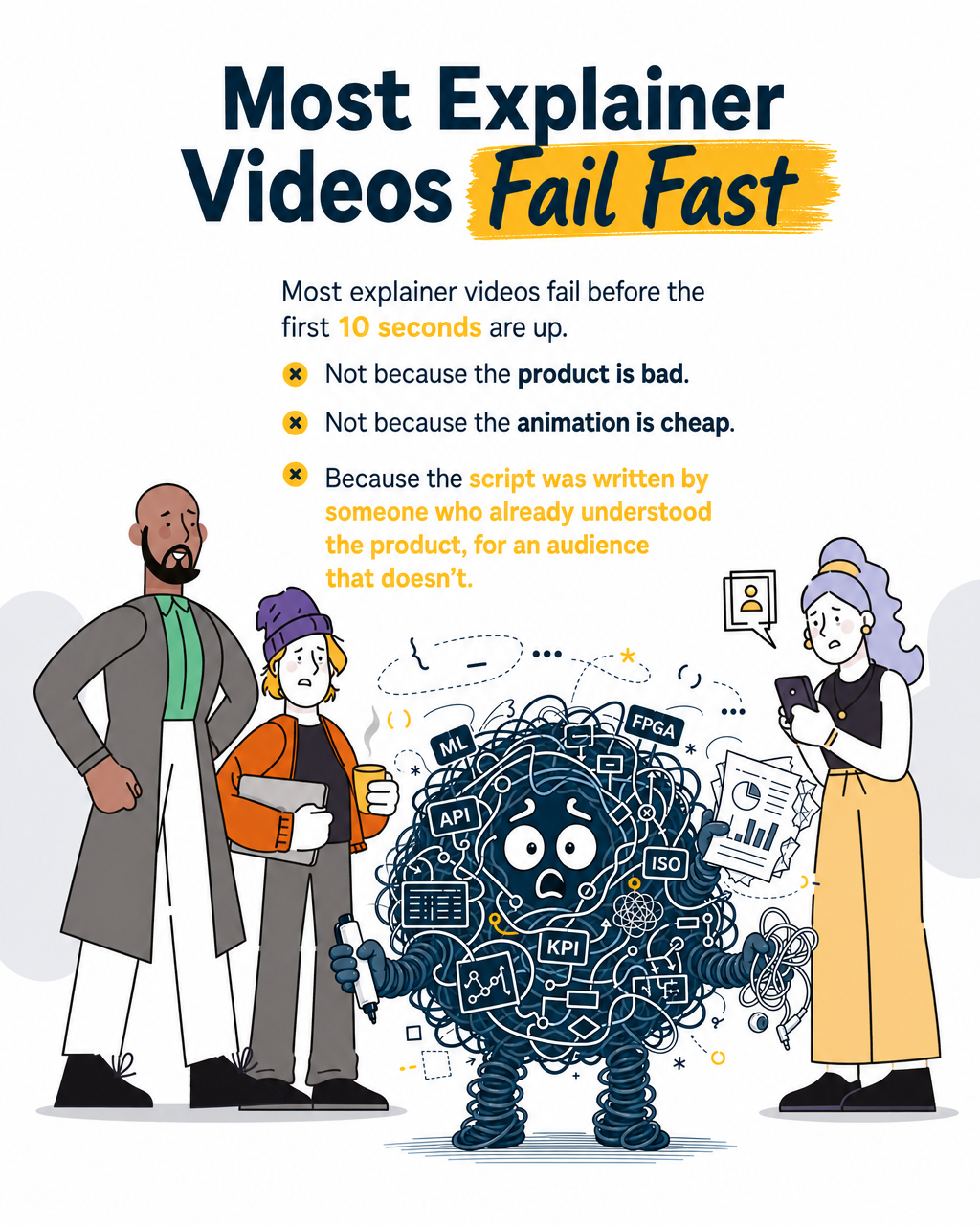
Most tech companies with a confusing product don't have a motion-graphics problem. They have a narrative architecture problem. They're trying to explain what their product does before they've established why a buyer should care. They lead with features. They use their internal vocabulary. They assume technical sophistication that their audience doesn't have.
A well-made explainer solves for comprehension, not aesthetics. And comprehension is a strategic problem before it's a creative one.
This is why the most important thing a specialist explainer studio brings isn't better animation software. It's a production process that starts with buyer psychology: who is watching this, what do they already believe, what's the one thing they need to understand, and what does understanding that make them do next.
That work is what a good $5,000 explainer buys you. Not just moving graphics. A story that was built for a specific audience from the ground up.
A generic motion-graphics agency can execute any brief you hand them beautifully. The risk is that the brief itself is wrong, and a beautiful video built on a confused brief is a very expensive mistake.
The metric nobody uses, but should: comprehension lift
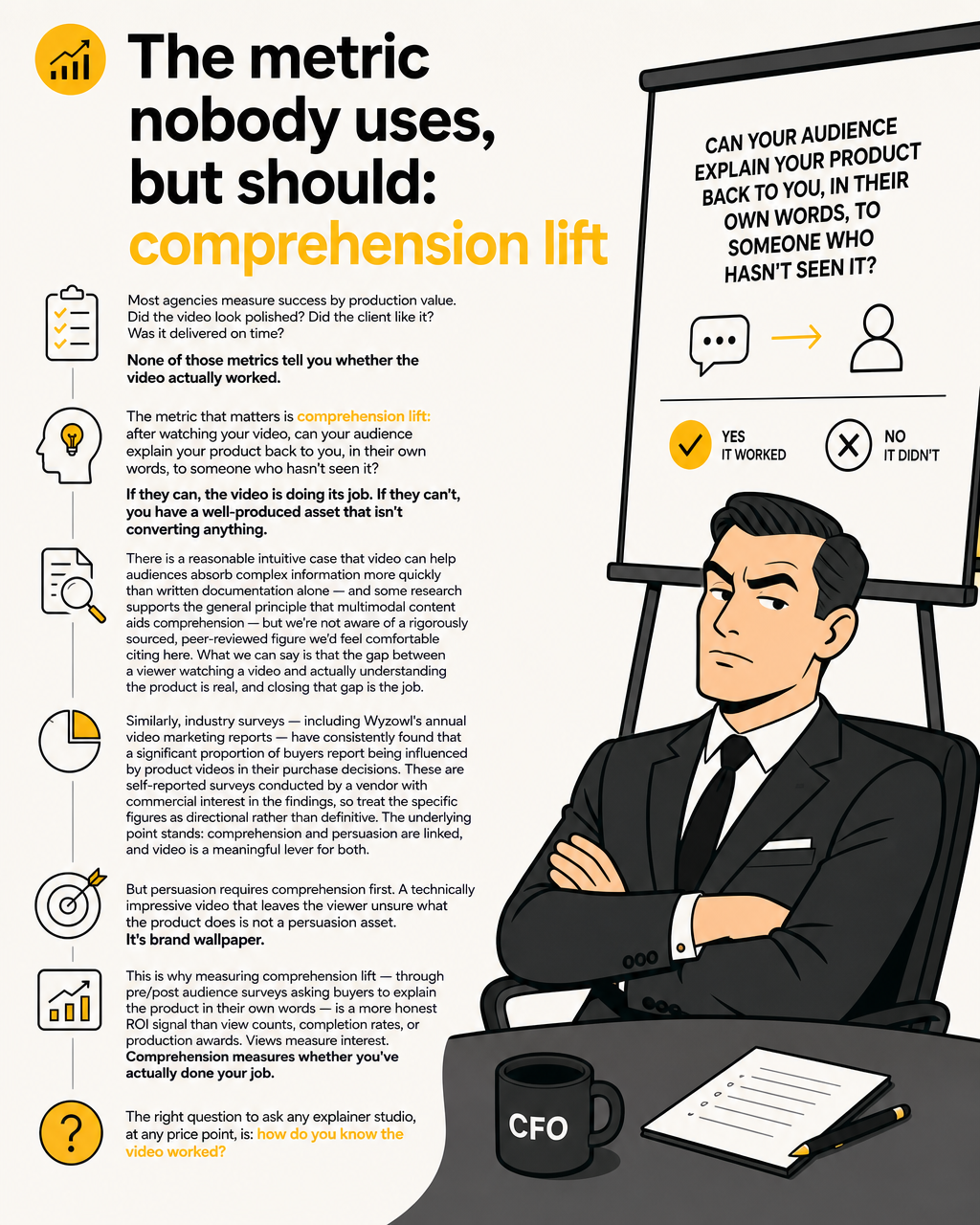
Most agencies measure success by production value. Did the video look polished? Did the client like it? Was it delivered on time?
None of those metrics tell you whether the video actually worked.
The metric that matters is comprehension lift: after watching your video, can your audience explain your product back to you, in their own words, to someone who hasn't seen it?
If they can, the video is doing its job. If they can't, you have a well-produced asset that isn't converting anything.
There is a reasonable intuitive case that video can help audiences absorb complex information more quickly than written documentation alone — and some research supports the general principle that multimodal content aids comprehension — but we're not aware of a rigorously sourced, peer-reviewed figure we'd feel comfortable citing here. What we can say is that the gap between a viewer watching a video and actually understanding the product is real, and closing that gap is the job.
Similarly, industry surveys — including Wyzowl's annual video marketing reports — have consistently found that a significant proportion of buyers report being influenced by product videos in their purchase decisions. These are self-reported surveys conducted by a vendor with commercial interest in the findings, so treat the specific figures as directional rather than definitive. The underlying point stands: comprehension and persuasion are linked, and video is a meaningful lever for both.
But persuasion requires comprehension first. A technically impressive video that leaves the viewer unsure what the product does is not a persuasion asset. It's brand wallpaper.
This is why measuring comprehension lift — through pre/post audience surveys asking buyers to explain the product in their own words — is a more honest ROI signal than view counts, completion rates, or production awards. Views measure interest. Comprehension measures whether you've actually done your job.
The right question to ask any explainer studio, at any price point, is: how do you know the video worked?
The real cost comparison: explainer fee vs. deal lost
Let's think through the actual stakes for an ANZ founder.
You're heading into a Series A raise. Or you're onboarding a new enterprise buyer persona. Or you're presenting at a demo day in six weeks.
You walk in with a product that's genuinely complex, and a pitch that explains it the way your engineers would explain it internally. You've got a deck. You've got a white paper. You've got enthusiasm.
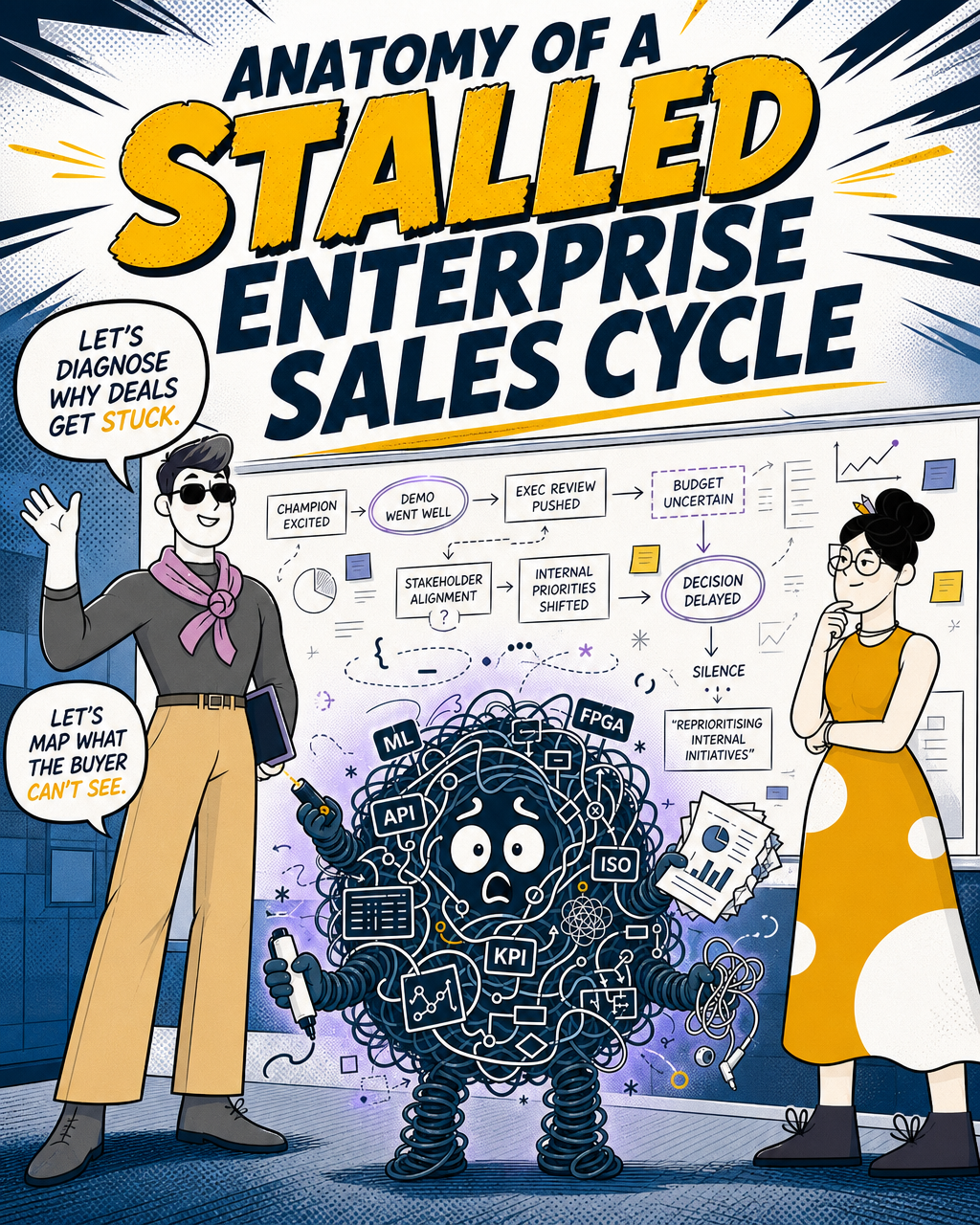
The investor in the room, politely, doesn't get it. They smile, they ask a few surface-level questions, and they pass. Or the procurement committee takes your proposal back to review it, and nobody in the room can explain to the CFO what the product actually does.
What was that worth?
In some cases, a lost Series A meeting can represent significant dilution, time, and runway — though the causes of any given outcome are rarely reducible to pitch clarity alone. A lost enterprise deal can similarly represent months of sales effort, depending on your cycle. These are illustrative scenarios, not typical outcomes, and an explainer video is one variable among many.
A $5,000–$8,000 explainer video is, in that context, a relatively low-cost investment aimed at reducing one specific and addressable risk: the risk that your product is too hard to explain quickly.
The case for acting before a high-stakes meeting rather than after is straightforward. In our experience working with ANZ founders, the brief to commission an explainer often comes the week after a meeting goes badly rather than the week before — that's an observation from our own client history, not an industry-wide documented pattern.
The ANZ B2B market is relationship-driven and, in some sectors, relatively concentrated. First impressions matter here as they do anywhere. If the first time a partner at an Auckland venture fund sees your product is through a muddled pitch deck, the second meeting is harder to get than the first.
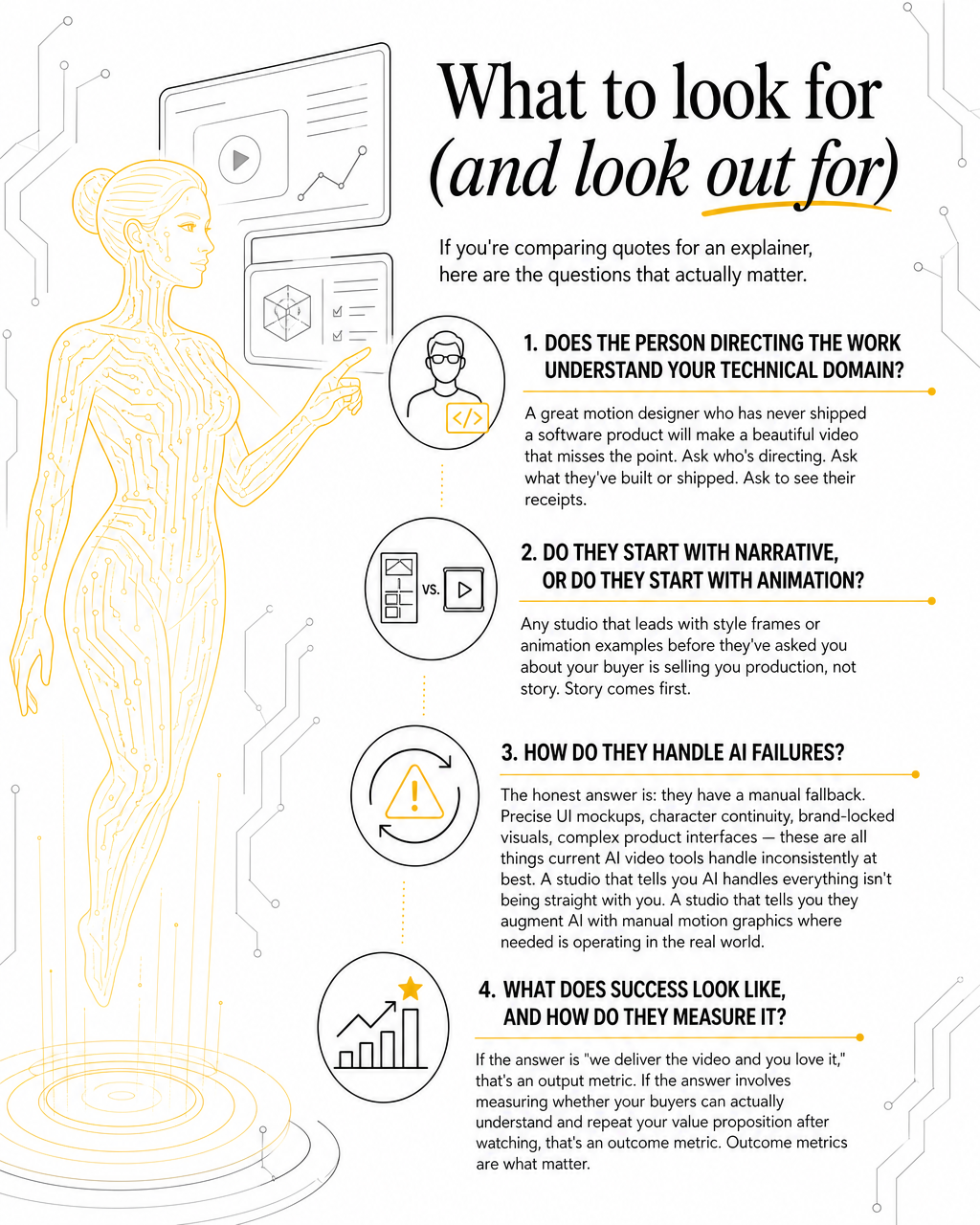
What to look for (and look out for)
If you're comparing quotes for an explainer, here are the questions that actually matter.
Does the person directing the work understand your technical domain? A great motion designer who has never shipped a software product will make a beautiful video that misses the point. Ask who's directing. Ask what they've built or shipped. Ask to see their receipts.
Do they start with narrative, or do they start with animation? Any studio that leads with style frames or animation examples before they've asked you about your buyer is selling you production, not story. Story comes first.
How do they handle AI failures? The honest answer is: they have a manual fallback. Precise UI mockups, character continuity, brand-locked visuals, complex product interfaces — these are all things current AI video tools handle inconsistently at best. A studio that tells you AI handles everything isn't being straight with you. A studio that tells you they augment AI with manual motion graphics where needed is operating in the real world.
What does success look like, and how do they measure it? If the answer is "we deliver the video and you love it," that's an output metric. If the answer involves measuring whether your buyers can actually understand and repeat your value proposition after watching, that's an outcome metric. Outcome metrics are what matter.
The short version
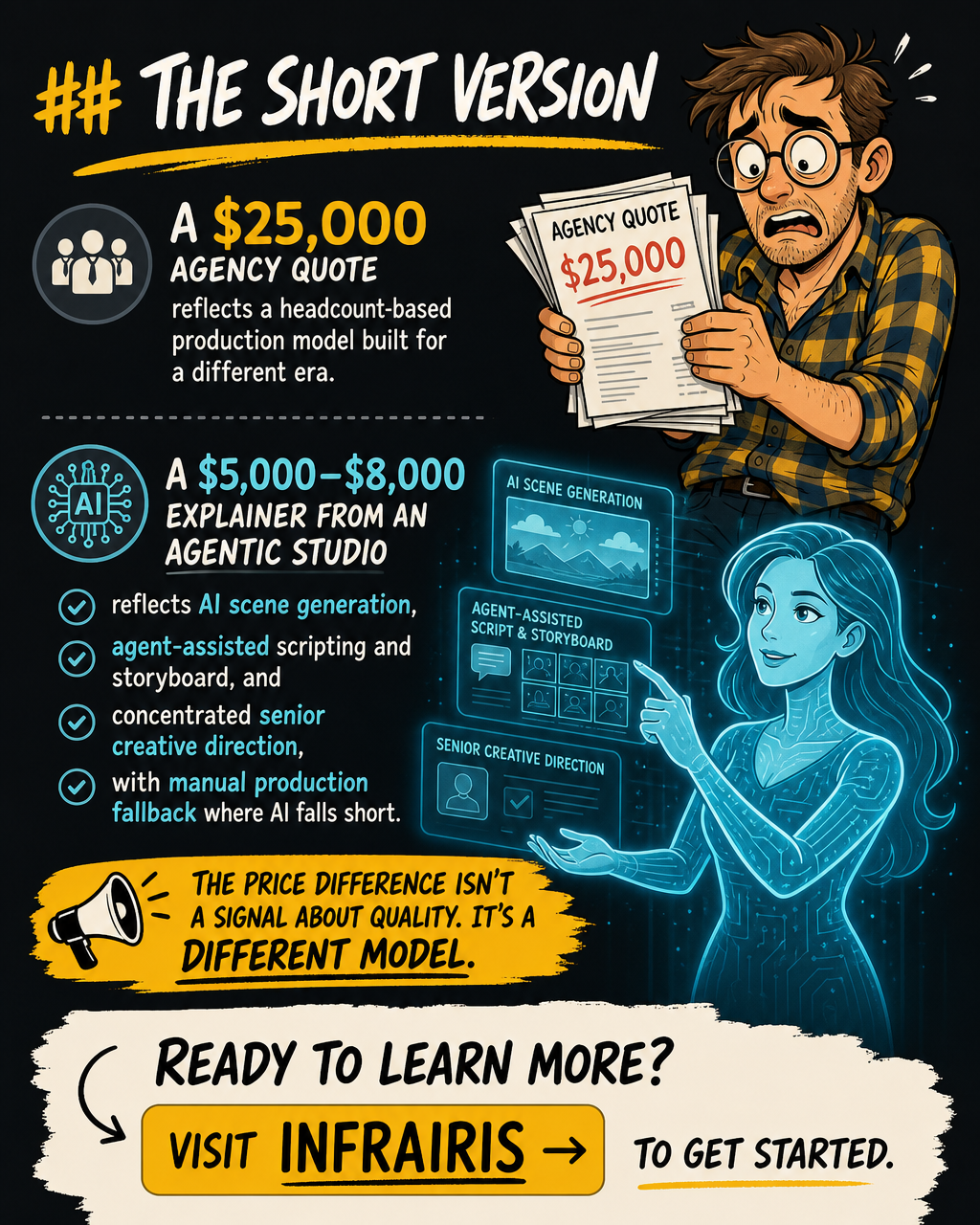
A $25,000 agency quote reflects a headcount-based production model built for a different era. A $5,000–$8,000 explainer from an agentic studio reflects AI scene generation, agent-assisted scripting and storyboard, and concentrated senior creative direction, with manual production fallback where AI falls short.
The price difference isn't a signal about quality. It's a
Ready to learn more? Visit Infrairis to get started.

Infrairis
Your complex product. In 60 seconds. Clearly.
Your complex product. In 60 seconds. Clearly.
Learn more about Infrairis and get started today.
Visit Infrairis