Three AI Models Reshaping Protein Design: A Plain-English Investor Guide
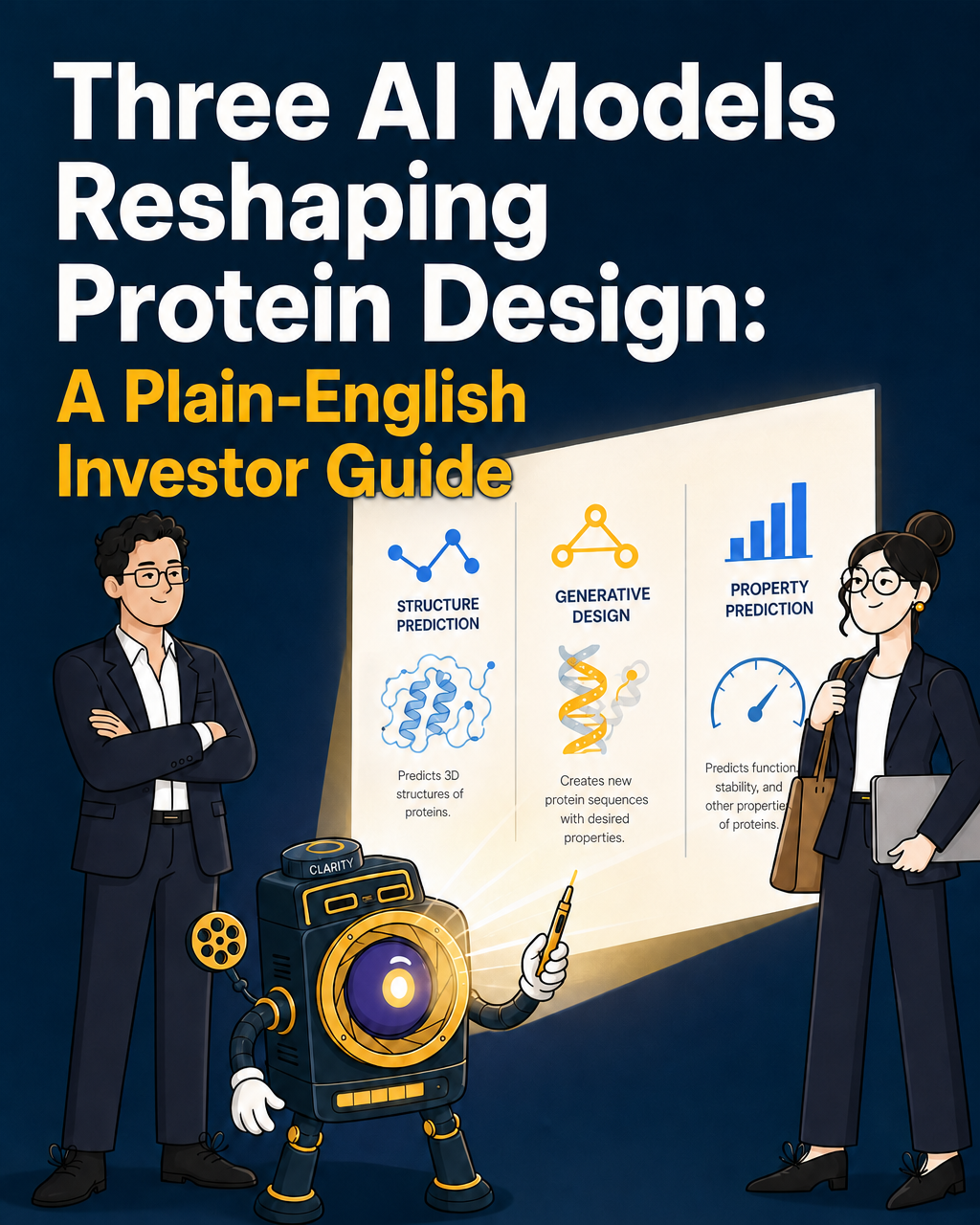


If you're evaluating synthetic biology or biotech companies right now, you've almost certainly seen pitch decks claim their platform is "powered by AI protein design." The problem is that phrase covers at least three fundamentally different types of technology, each with a different commercial thesis, a different risk profile, and a very different answer to the question: what does this thing actually do?
This post separates the three main AI approaches used in protein and enzyme design, explains what each one is trained to accomplish, and then explains why a number of companies in the space are combining all three into hybrid pipelines that compress years of wet-lab iteration into weeks of in-silico computation.
Why protein design matters to your portfolio right now
The AI protein design market is growing rapidly, though estimates of its precise size vary considerably depending on how the category boundary is drawn — whether it encompasses all AI-assisted drug discovery, computational biology broadly, or only dedicated protein engineering platforms. That definitional ambiguity matters: treat market-size figures in pitch decks with appropriate scepticism unless the methodology is disclosed. What is clear is where institutional money is moving: not into academic structure prediction, but into commercial platforms that can actually produce engineered proteins with specified functions. AI protein design has emerged as one of the more heavily funded subsectors in biotech in 2025–2026, with capital flowing into companies applying machine learning to drug design and protein engineering — though the field sits alongside, and should not be confused with, adjacent AI applications such as clinical trial optimisation.
The reason investors are paying attention isn't abstract. These tools have reduced the time required to obtain a working model of a protein's three-dimensional structure — in cases where experimental determination was previously necessary — from months or years to hours or days, by predicting structure computationally from sequence alone. That's a substantial speedup, and one that changes what's commercially viable to attempt.
But to assess whether a specific company's platform is genuinely differentiated, you need to understand what kind of AI they're actually running. There are three distinct architectures, and they're not interchangeable.
Model type 1: Protein language models (PLMs)
What they are
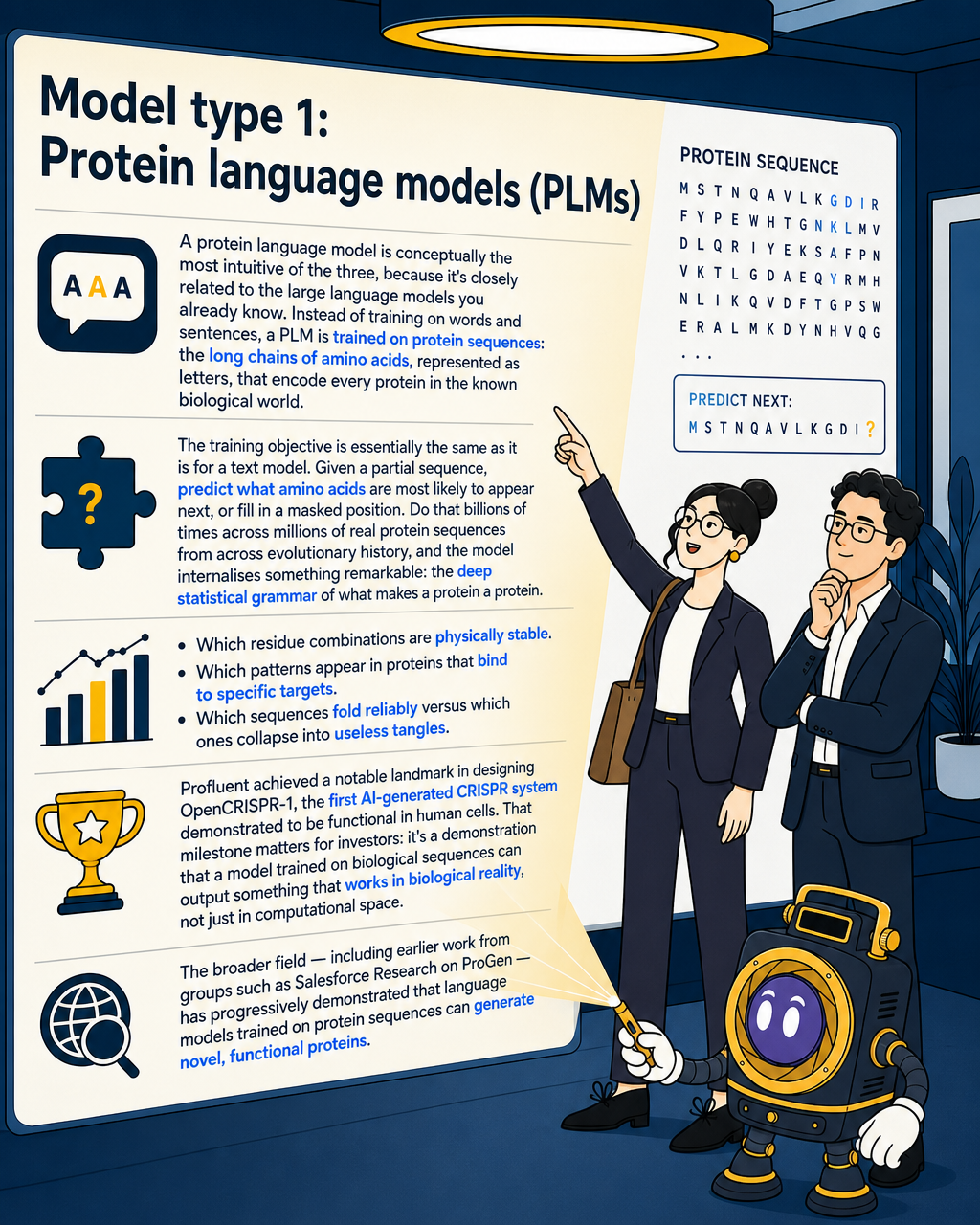
A protein language model is conceptually the most intuitive of the three, because it's closely related to the large language models you already know. Instead of training on words and sentences, a PLM is trained on protein sequences: the long chains of amino acids, represented as letters, that encode every protein in the known biological world.
The training objective is essentially the same as it is for a text model. Given a partial sequence, predict what amino acids are most likely to appear next, or fill in a masked position. Do that billions of times across millions of real protein sequences from across evolutionary history, and the model internalises something remarkable: the deep statistical grammar of what makes a protein a protein. Which residue combinations are physically stable. Which patterns appear in proteins that bind to specific targets. Which sequences fold reliably versus which ones collapse into useless tangles.
A model like ESM2, trained on large-scale protein sequence data, provides a deep understanding of the context of the sequence, improving the model's ability to generate biologically relevant proteins.
Profluent achieved a notable landmark in designing OpenCRISPR-1, the first AI-generated CRISPR system demonstrated to be functional in human cells. That milestone matters for investors: it's a demonstration that a model trained on biological sequences can output something that works in biological reality, not just in computational space. The broader field — including earlier work from groups such as Salesforce Research on ProGen — has progressively demonstrated that language models trained on protein sequences can generate novel, functional proteins.
What they're commercially good for
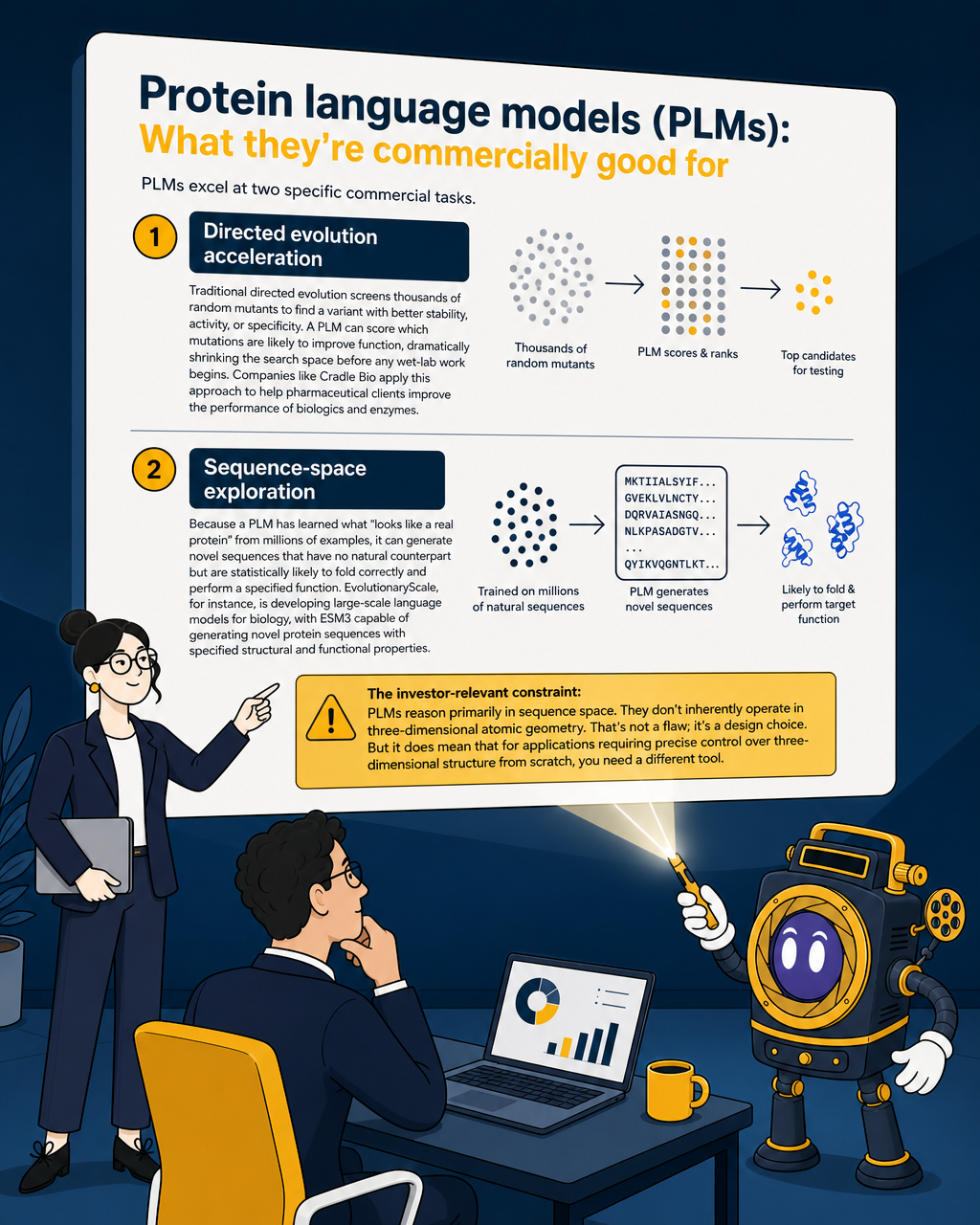
PLMs excel at two specific commercial tasks.
The first is directed evolution acceleration. Traditional directed evolution screens thousands of random mutants to find a variant with better stability, activity, or specificity. A PLM can score which mutations are likely to improve function, dramatically shrinking the search space before any wet-lab work begins. Companies like Cradle Bio apply this approach to help pharmaceutical clients improve the performance of biologics and enzymes.
The second is sequence-space exploration. Because a PLM has learned what "looks like a real protein" from millions of examples, it can generate novel sequences that have no natural counterpart but are statistically likely to fold correctly and perform a specified function. EvolutionaryScale, for instance, is developing large-scale language models for biology, with ESM3 capable of generating novel protein sequences with specified structural and functional properties.
The investor-relevant constraint: PLMs reason primarily in sequence space. They don't inherently operate in three-dimensional atomic geometry. That's not a flaw; it's a design choice. But it does mean that for applications requiring precise control over three-dimensional structure from scratch, you need a different tool.
Model type 2: Diffusion models
What they are
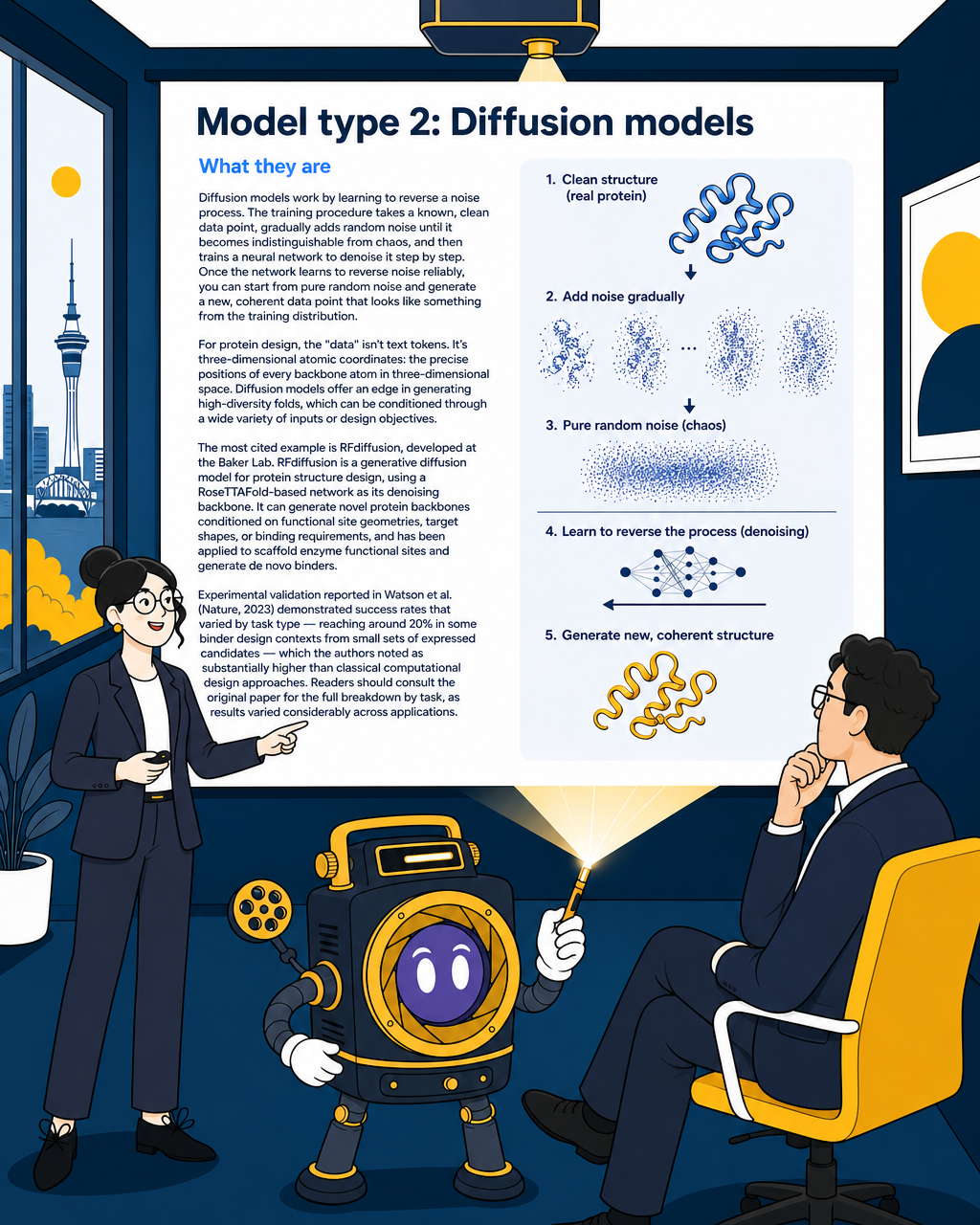
Diffusion models work by learning to reverse a noise process. The training procedure takes a known, clean data point, gradually adds random noise until it becomes indistinguishable from chaos, and then trains a neural network to denoise it step by step. Once the network learns to reverse noise reliably, you can start from pure random noise and generate a new, coherent data point that looks like something from the training distribution.
For protein design, the "data" isn't text tokens. It's three-dimensional atomic coordinates: the precise positions of every backbone atom in three-dimensional space. Diffusion models offer an edge in generating high-diversity folds, which can be conditioned through a wide variety of inputs or design objectives.
The most cited example is RFdiffusion, developed at the Baker Lab. RFdiffusion is a generative diffusion model for protein structure design, using a RoseTTAFold-based network as its denoising backbone. It can generate novel protein backbones conditioned on functional site geometries, target shapes, or binding requirements, and has been applied to scaffold enzyme functional sites and generate de novo binders.
Experimental validation reported in Watson et al. (Nature, 2023) demonstrated success rates that varied by task type — reaching around 20% in some binder design contexts from small sets of expressed candidates — which the authors noted as substantially higher than classical computational design approaches. Readers should consult the original paper for the full breakdown by task, as results varied considerably across applications.
What they're commercially good for
Diffusion models are the primary tool for de novo structural scaffolding, meaning the creation of protein backbone geometries that don't exist anywhere in nature. If you want to design a protein that cradles a small molecule in a precisely shaped binding pocket, or that forms a specific geometric structure for materials applications, a diffusion model gives you a way to generate candidate three-dimensional frameworks directly, without needing to find a natural starting point.
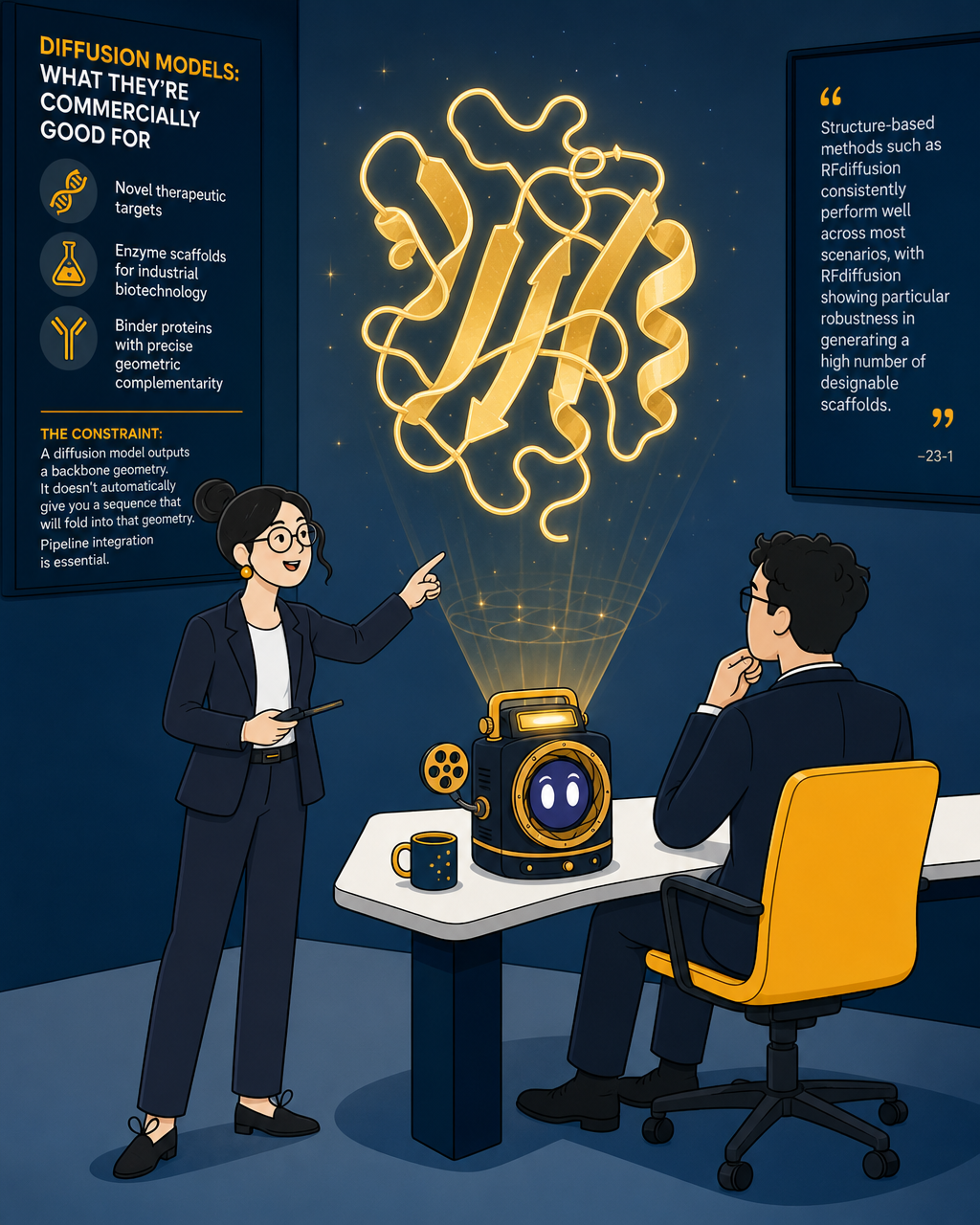
Structure-based methods such as RFdiffusion consistently perform well across most scenarios, with RFdiffusion showing particular robustness in generating a high number of designable scaffolds.
For investors, the commercial upside of diffusion-based protein design is in entirely novel therapeutic targets, enzyme scaffolds for industrial biotechnology, and binder proteins that need precise geometric complementarity to a target. Generate:Biomedicines, which uses diffusion-based generative models to design therapeutics, has attracted significant institutional backing on exactly this thesis.
The constraint: a diffusion model outputs a backbone geometry. It doesn't automatically give you a sequence that will fold into that geometry, which is where the pipeline integration becomes important.
Model type 3: Structure prediction (discriminative) backbones
What they are
This is the category most investors have heard of, because it contains AlphaFold.
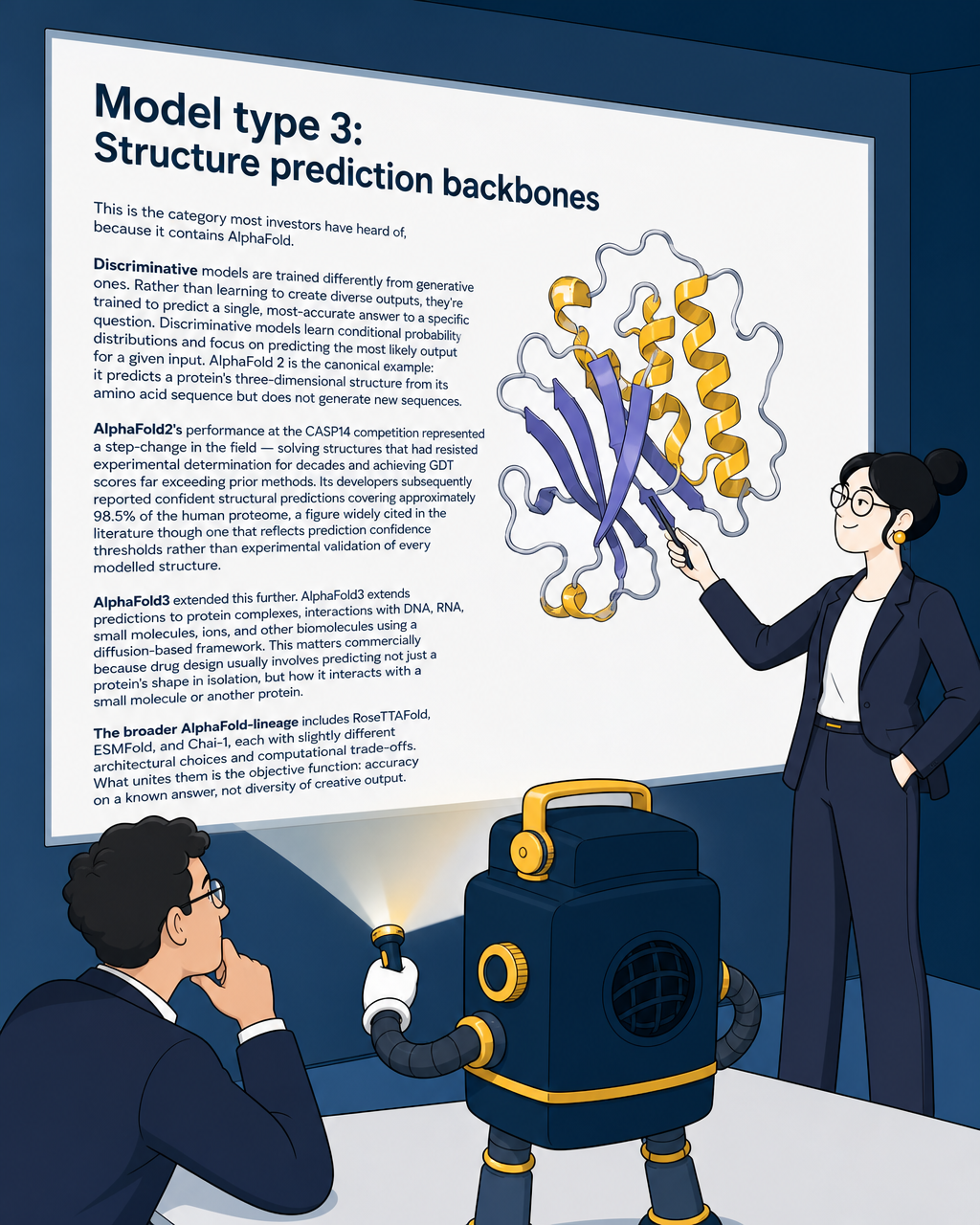
Discriminative models are trained differently from generative ones. Rather than learning to create diverse outputs, they're trained to predict a single, most-accurate answer to a specific question. Discriminative models learn conditional probability distributions and focus on predicting the most likely output for a given input. AlphaFold 2 is the canonical example: it predicts a protein's three-dimensional structure from its amino acid sequence but does not generate new sequences.
AlphaFold2's performance at the CASP14 competition represented a step-change in the field — solving structures that had resisted experimental determination for decades and achieving GDT scores far exceeding prior methods. Its developers subsequently reported confident structural predictions covering approximately 98.5% of the human proteome, a figure widely cited in the literature though one that reflects prediction confidence thresholds rather than experimental validation of every modelled structure.
AlphaFold3 extended this further. AlphaFold3 extends predictions to protein complexes, interactions with DNA, RNA, small molecules, ions, and other biomolecules using a diffusion-based framework. This matters commercially because drug design usually involves predicting not just a protein's shape in isolation, but how it interacts with a small molecule or another protein.
The broader AlphaFold-lineage includes RoseTTAFold, ESMFold, and Chai-1, each with slightly different architectural choices and computational trade-offs. What unites them is the objective function: accuracy on a known answer, not diversity of creative output.
What they're commercially good for
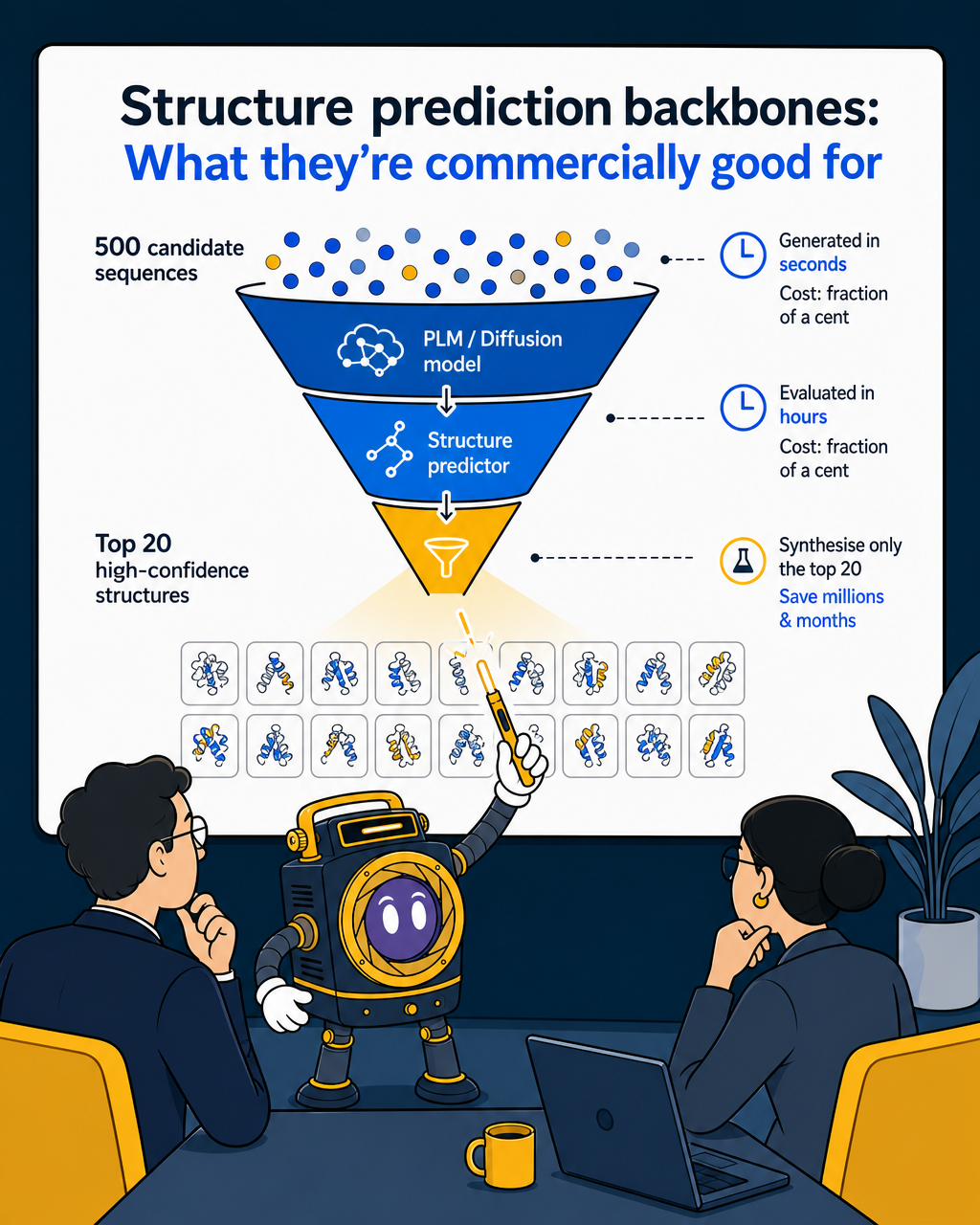
Discriminative structure predictors are the validation and filtering layer in serious protein design pipelines. When a PLM or diffusion model generates hundreds of candidate sequences or scaffolds, someone needs to quickly assess which ones are actually likely to fold into a functional three-dimensional structure. Running every candidate through wet-lab synthesis and characterisation would cost millions of dollars and months of time. Running them through AlphaFold or ESMFold takes hours and fractions of a cent per candidate.
This is the function that compresses the design cycle. Instead of synthesising 500 candidates and hoping some work, a team uses a discriminative predictor to filter 500 candidates to the 20 most likely to fold correctly, then synthesises only those. The hit rate goes up. The cost per validated candidate drops dramatically.
Protein structure prediction tools have become standard in biotech R&D workflows, with broad adoption reported across major pharmaceutical and biotechnology organisations. That adoption reflects exactly this use case: not primary design, but in-silico validation before expensive wet-lab work.
The part that actually matters for investors: hybrid pipelines
The three paradigms above are increasingly used together, not separately. Understanding the hybrid pipeline is the key to assessing whether a company's platform represents a genuine defensible advantage or just a well-named single-model approach.
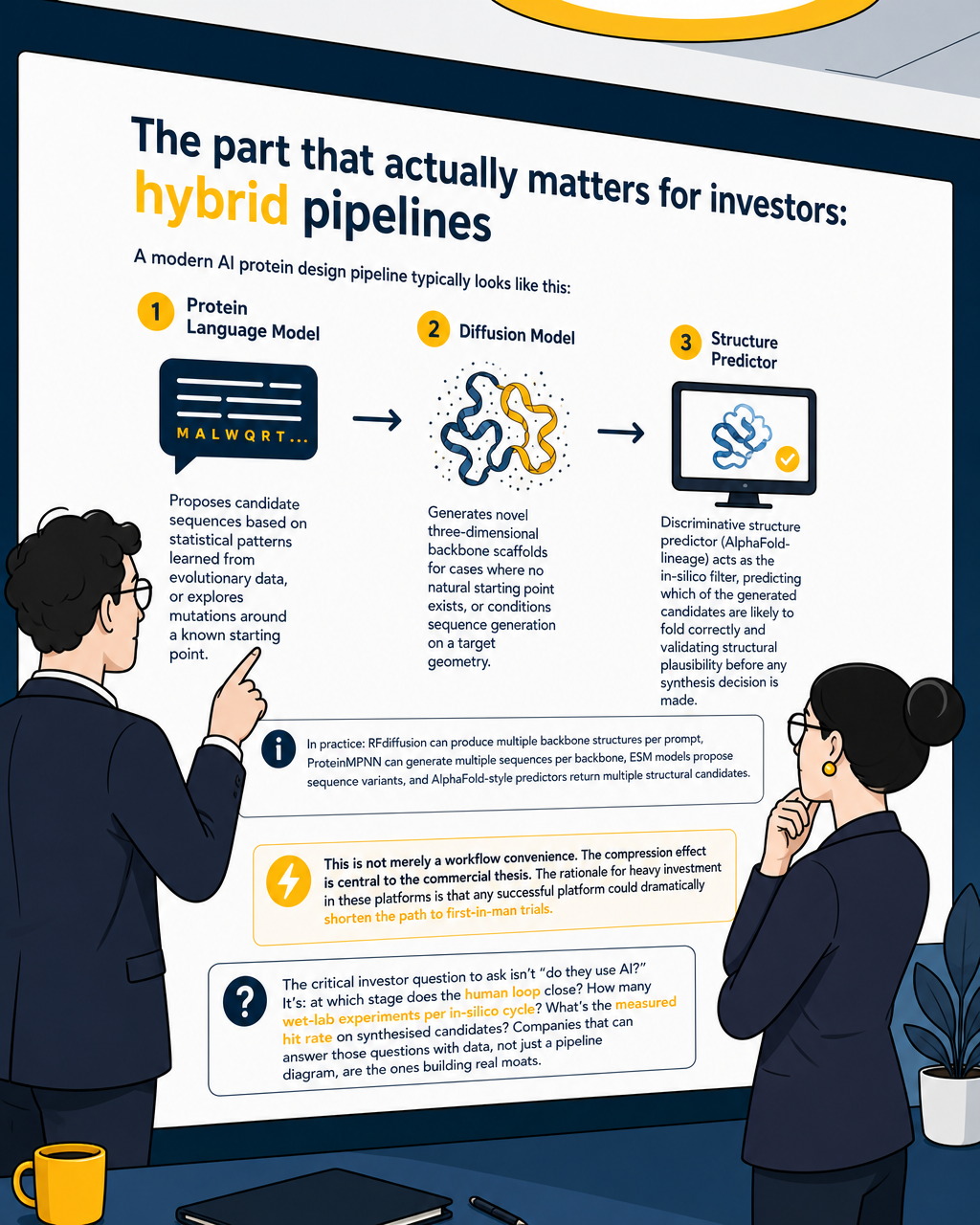
A modern AI protein design pipeline typically looks like this:
- A protein language model proposes candidate sequences based on statistical patterns learned from evolutionary data, or explores mutations around a known starting point.
- A diffusion model generates novel three-dimensional backbone scaffolds for cases where no natural starting point exists, or conditions sequence generation on a target geometry.
- A discriminative structure predictor (AlphaFold-lineage) acts as the in-silico filter, predicting which of the generated candidates are likely to fold correctly and validating structural plausibility before any synthesis decision is made.
In practice: RFdiffusion can produce multiple backbone structures per prompt, ProteinMPNN can generate multiple sequences per backbone, ESM models propose sequence variants, and AlphaFold-style predictors return multiple structural candidates.
This is not merely a workflow convenience. The compression effect is central to the commercial thesis. The rationale for heavy investment in these platforms is that any successful platform could dramatically shorten the path to first-in-man trials.
The critical investor question to ask isn't "do they use AI?" It's: at which stage does the human loop close? How many wet-lab experiments per in-silico cycle? What's the measured hit rate on synthesised candidates? Companies that can answer those questions with data, not just a pipeline diagram, are the ones building real moats.
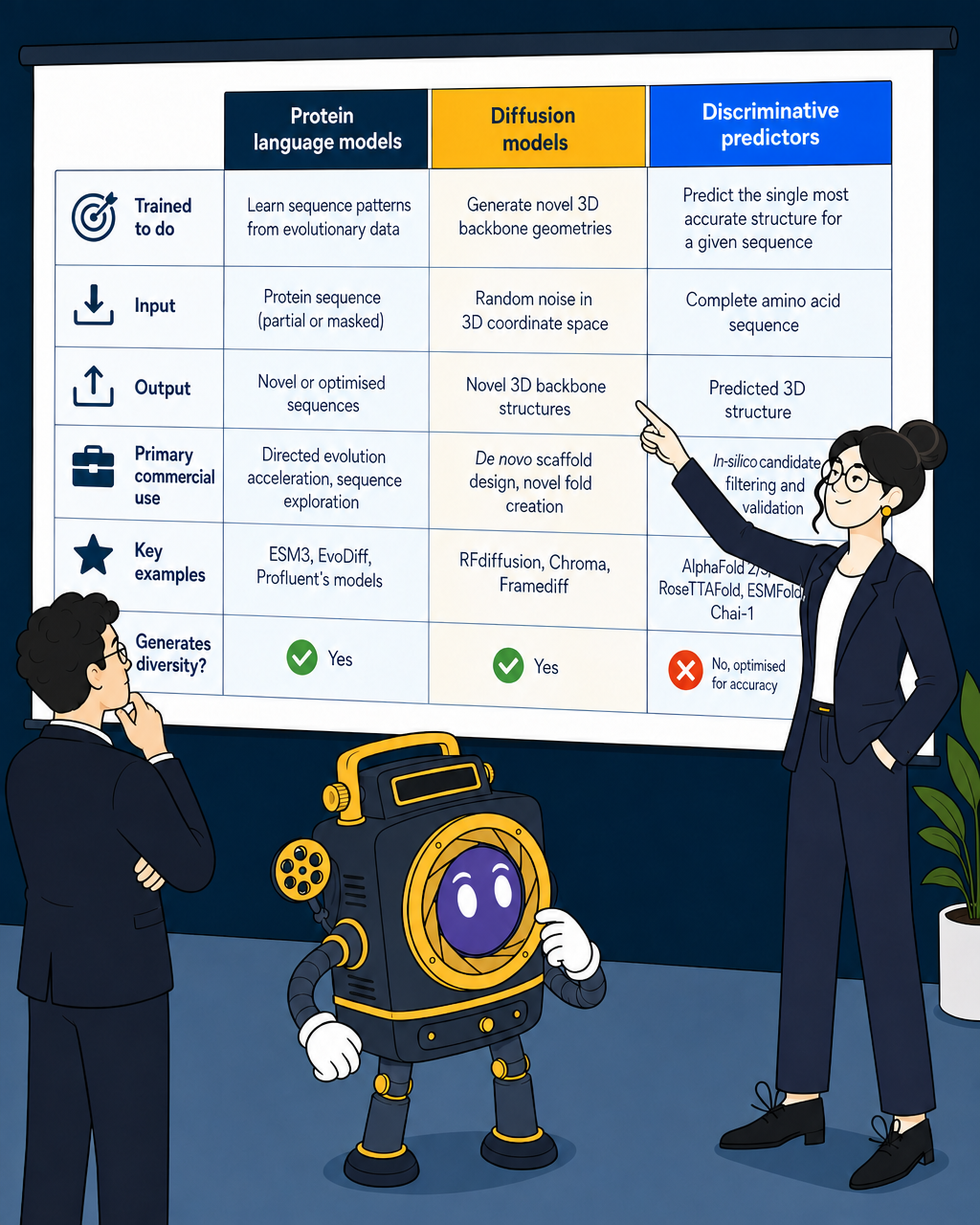
A quick reference table
| Protein language models | Diffusion models | Discriminative predictors | |
|---|---|---|---|
| Trained to do | Learn sequence patterns from evolutionary data | Generate novel 3D backbone geometries | Predict the single most accurate structure for a given sequence |
| Input | Protein sequence (partial or masked) | Random noise in 3D coordinate space | Complete amino acid sequence |
| Output | Novel or optimised sequences | Novel 3D backbone structures | Predicted 3D structure |
| Primary commercial use | Directed evolution acceleration, sequence exploration | De novo scaffold design, novel fold creation | In-silico candidate filtering and validation |
| Key examples | ESM3, EvoDiff, Profluent's models | RFdiffusion, Chroma, Framediff | AlphaFold2/3, RoseTTAFold, ESMFold, Chai-1 |
| Generates diversity? | Yes | Yes | No, optimised for accuracy |
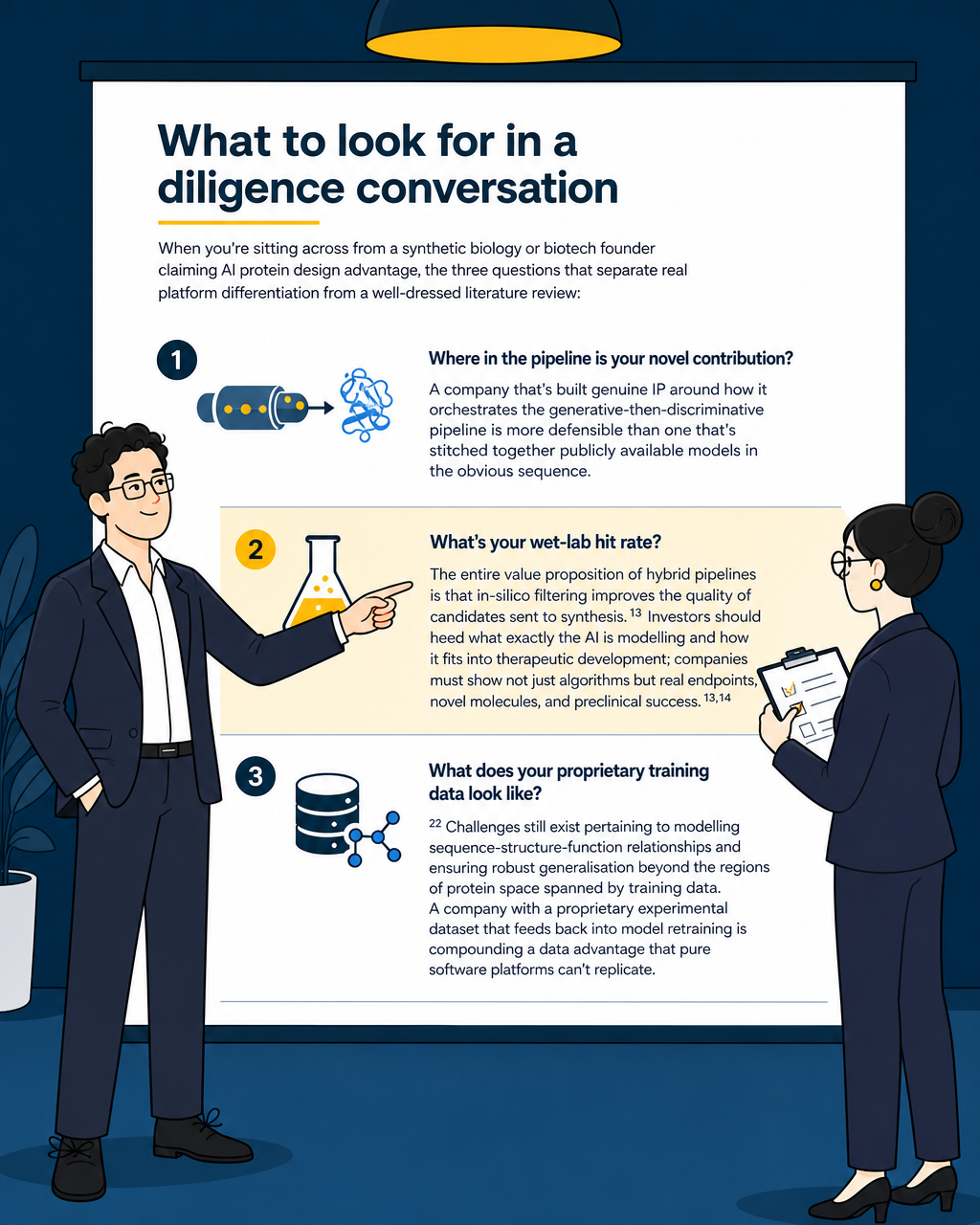
What to look for in a diligence conversation
When you're sitting across from a synthetic biology or biotech founder claiming AI protein design advantage, the three questions that separate real platform differentiation from a well-dressed literature review:
First: Where in the pipeline is your novel contribution? A company that's built genuine IP around how it orchestrates the generative-then-discriminative pipeline is more defensible than one that's stitched together publicly available models in the obvious sequence.
Second: What's your wet-lab hit rate? The entire value proposition of hybrid pipelines is that in-silico filtering improves the quality of candidates sent to synthesis. Investors should heed what exactly the AI is modelling and how it fits into therapeutic development; companies must show not just algorithms but real endpoints, novel molecules, and preclinical success.
Third: What does your proprietary training data look like? Challenges still exist pertaining to modelling sequence-structure-function relationships and ensuring robust generalisation beyond the regions of protein space spanned by training data. A company with a proprietary experimental dataset that feeds back into model retraining is compounding a data advantage that pure software platforms can't replicate.
The bottom line
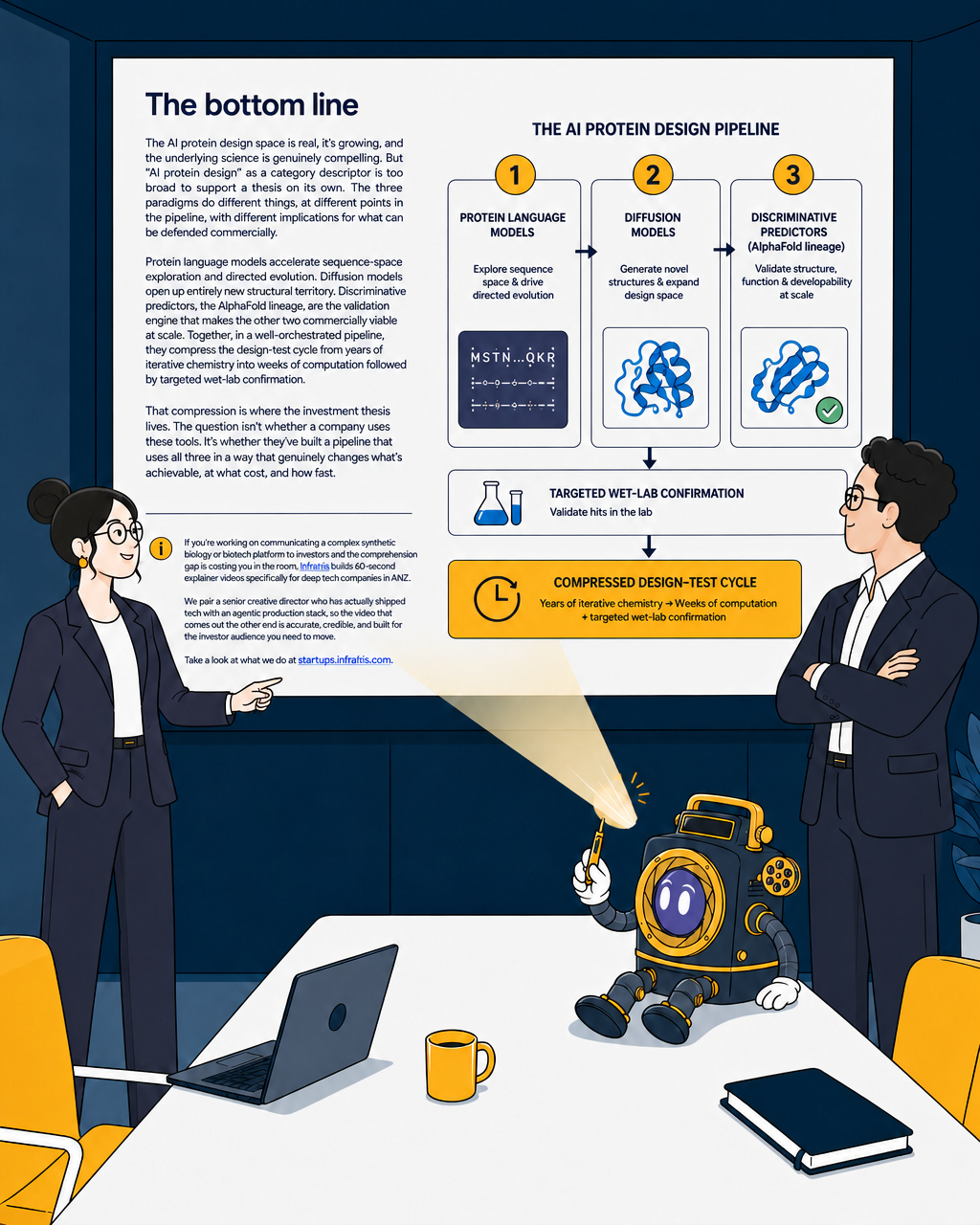
The AI protein design space is real, it's growing, and the underlying science is genuinely compelling. But "AI protein design" as a category descriptor is too broad to support a thesis on its own. The three paradigms do different things, at different points in the pipeline, with different implications for what can be defended commercially.
Protein language models accelerate sequence-space exploration and directed evolution. Diffusion models open up entirely new structural territory. Discriminative predictors, the AlphaFold lineage, are the validation engine that makes the other two commercially viable at scale. Together, in a well-orchestrated pipeline, they compress the design-test cycle from years of iterative chemistry into weeks of computation followed by targeted wet-lab confirmation.
That compression is where the investment thesis lives. The question isn't whether a company uses these tools. It's whether they've built a pipeline that uses all three in a way that genuinely changes what's achievable, at what cost, and how fast.
If you're working on communicating a complex synthetic biology or biotech platform to investors and the comprehension gap is costing you in the room, Infrairis builds 60-second explainer videos specifically for deep tech companies in ANZ. We pair a senior creative director who has actually shipped tech with an agentic production stack, so the video that comes out the other end is accurate, credible, and built for the investor audience you need to move. Take a look at what we do at startups.infrairis.com.

Infrairis
Your complex product. In 60 seconds. Clearly.
Your complex product. In 60 seconds. Clearly.
Learn more about Infrairis and get started today.
Visit Infrairis